The distinctions between traditional and decentralized finance are becoming increasingly unclear as major cryptocurrency trading platforms expand their offerings to include products that were once reserved for conventional brokerage firms. This shift is illustrated by recent announcements from Kraken, Coinbase, and Binance, each targeting traditional investment markets with innovative financial instruments.
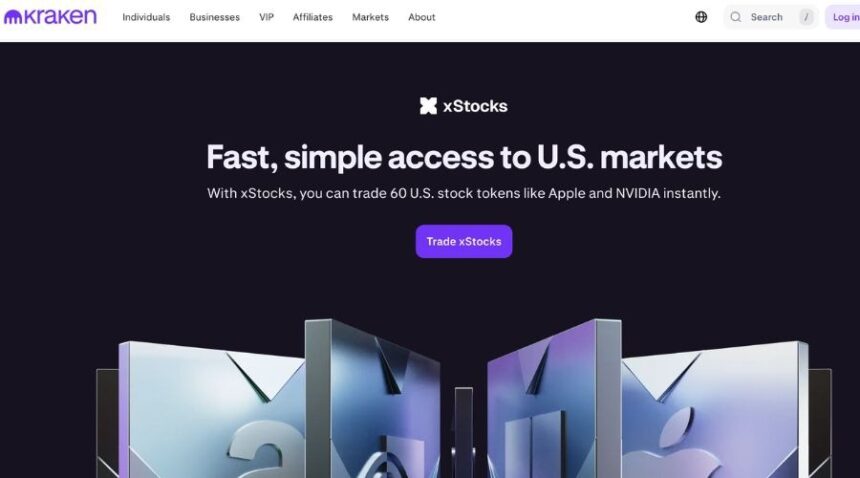
In late February, Kraken unveiled its plans to introduce perpetual futures for tokenized stocks specifically for non-US clients. This allows for continuous, 24/7 trading of equity price exposures with the potential for leverage up to 20 times. The perpetual futures will cover a range of widely recognized equity indices, commodities, and publicly traded companies. This product innovation is seen as a key link for tokenized equities, enabling continuous trading without expiration and utilizing funding rates to synchronize prices with spot markets. Since its launch, Kraken’s xStocks has already facilitated $25 billion in tokenized trades within a short period, underscoring significant market demand.
Simultaneously, Coinbase announced the ability for its US users to trade stocks and ETFs alongside their cryptocurrency holdings. By integrating traditional stocks and ETFs into its platform, Coinbase not only enhances the options available to its existing users but also positions itself as a contender against multi-asset trading applications that incorporate both traditional and digital assets. If the initiative leads to increased trading activity and attracts equity-focused investors, it could substantially boost Coinbase’s revenue streams from transactions and subscriptions. This step aligns with the company’s broader goals of providing institutional services, including stablecoin payments and custody solutions, further solidifying its role as infrastructure connecting digital and traditional financial assets.
Binance, too, has reintroduced a service for trading tokenized US stocks through a partnership with Ondo Finance. This offering features blockchain-based tokens for popular assets like Apple, Tesla, and Nvidia, which trade within the Binance Web3 wallet. Initially discontinued due to regulatory issues, the service’s re-launch marks Binance’s aim to reclaim a stake in this emerging market trend.
Alongside these crypto advancements, the asset management landscape is witnessing a renewed debate between active and passive investment strategies. Morningstar’s European active/passive barometer highlights the growing prevalence of passive funds, particularly in the context of rising ETF demand and an increase in investor engagement across key markets. The findings indicate that while active management offers potential, particularly within smaller-cap equities, passive investing is often more successful, raising concerns for active managers regarding their long-term performance.
The barometer revealed a one-year success rate of 17.3% for active managers in the eurozone large-cap equity category, reflecting a decline from previous periods but offering a slight increase compared to the previous year. Over a decade, the success rate dramatically dropped to just 3.8%. Factors influencing this trend include high fees associated with active management compared to passive strategies, particularly in fixed income markets.
In a related context, the resurgence of multi-asset strategies has been observed in response to market volatility. Multi-asset investments, which combine various asset types to achieve greater diversification, have demonstrated resilience during past turbulent periods, with only the recent year failing to deliver positive returns. Industry analysts suggest that now may be a favorable time for this investment approach due to improved balances between risk and returns, spurred by the current interest rate environment.
In summary, the convergence of traditional finance and the cryptocurrency space highlights an evolving financial landscape where the line between the two continues to blur, with significant implications for investors and financial service providers alike.