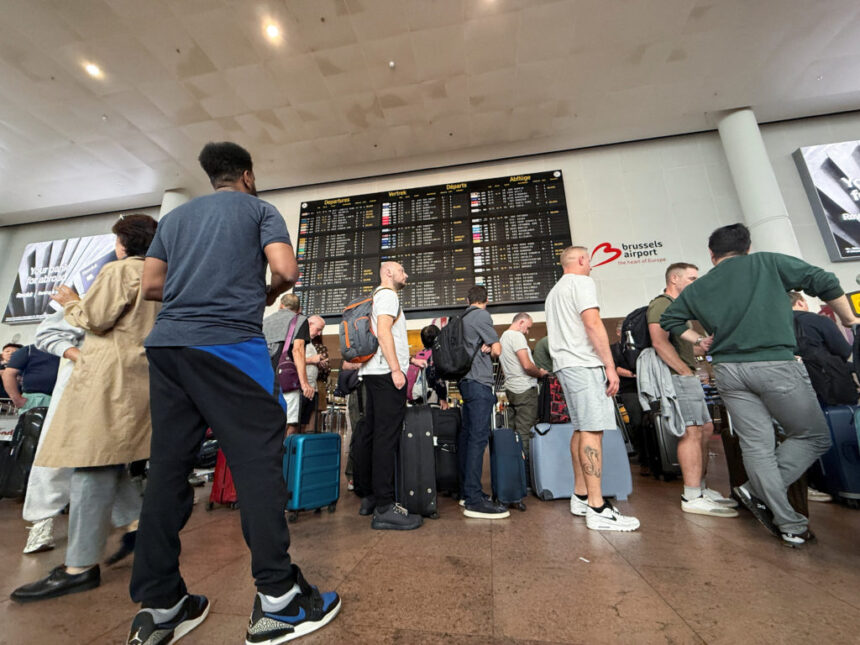
A recent cyberattack targeting the check-in and boarding systems at several major European airports has raised significant concerns about the security vulnerabilities within the aviation industry. The incident, which unfolded late Friday night, specifically impacted systems at Brussels Airport, Berlin’s Brandenburg Airport, and London’s Heathrow Airport, leading to a shift towards manual check-in and boarding processes.
Brussels Airport confirmed through a statement that the disruption stemmed from a cyberattack on its service provider, affecting multiple airports simultaneously. The compromised systems involved processes integral to passenger check-in, boarding pass printing, and baggage tagging, which are facilitated by Collins Aerospace’s software known as MUSE (Multi-User System Environment).
Travel analyst Paul Charles expressed surprise at the incident, highlighting the significant stature of Collins Aerospace within the aviation and defense sector, which normally boasts resilient security measures. The attack’s sophistication, affecting various airlines and airports at once, has raised alarms about the extensive vulnerabilities that exist within shared technological infrastructures.
As the day progressed, the operational impact appeared manageable, albeit with some challenges. Reports indicated that by mid-morning on Saturday, Brussels Airport had to cancel nine flights, redirect four others, and face delays for approximately 15 more. Meanwhile, Brandenburg Airport noted no cancellations attributed to the disruption, as they had severed connections to the compromised systems. Heathrow Airport, Europe’s busiest airport, also reported minimal disruptions, though the specifics regarding delayed flights remained undisclosed.
Some passengers voiced frustration over the reduced staffing levels at check-in counters, with many experiencing longer wait times as a result of the systems failure. Maria Casey, traveling to Thailand, shared her discontent after spending three hours managing baggage check-in at Heathrow, remarking on the insufficient number of staffed desks.
In response to the incident, Collins Aerospace is actively working to restore full functionality, indicating that while the cyberattack affected electronic customer check-in and baggage drop processes, manual operations were being implemented to alleviate the impact.
Experts weigh in on the larger implications of the attack, describing the aviation sector as an increasingly attractive target for cybercriminals due to its dependence on shared digital systems. The reliance on third-party platforms can create susceptibility; when a vendor is compromised, the consequences can cascade across multiple airlines and airports.
While authorities are still evaluating the motives behind the attack, safety experts suggest that it may appear more as an act of vandalism rather than a targeted extortion scheme. Ongoing investigations are expected to shed more light on the perpetrators involved.
Overall, this incident serves as a critical reminder of the aviation industry’s vulnerability to cyber threats, prompting calls for enhanced security measures to protect vital infrastructure and maintain operational integrity across international air travel.