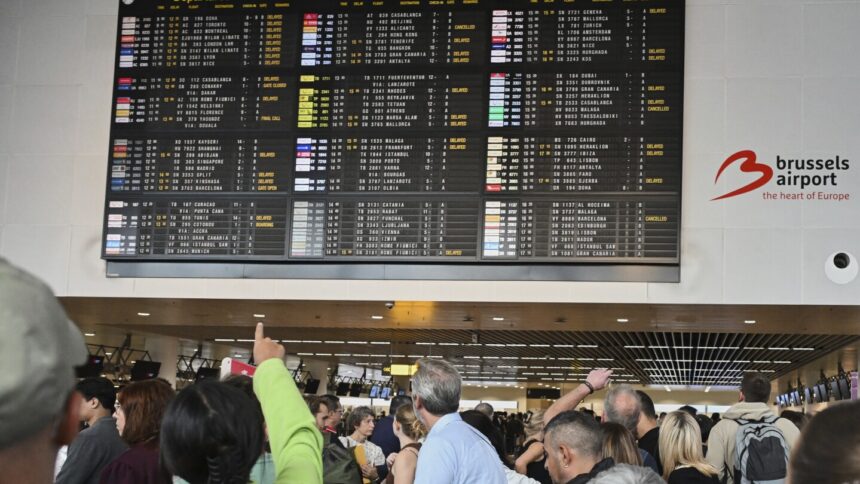
A significant cyberattack on Friday night has led to widespread disruptions at several major airports in Europe, specifically affecting check-in and boarding systems. The incident, targeting the service provider Collins Aerospace, has caused a shift to manual operations at airports including Brussels, Berlin’s Brandenburg, and London’s Heathrow. While airlines themselves were not directly compromised, the repercussions felt across the aviation sector highlight the vulnerabilities in digital security systems.
Brussels Airport reported a significant impact on flight schedules due to the attack, which was confirmed to be against its check-in and boarding systems provider. The disruption involved the MUSE (Multi-User System Environment) software used for passenger check-in, boarding pass printing, and luggage dispatch at kiosks. Although many airports managed to continue operations without major issues, the incident underscored essential weaknesses in the secure frameworks designed to protect air travel.
As the situation developed, Brussels Airport’s spokesperson informed that by mid-morning on Saturday, cancellations were reported with nine flights canceled, four redirected, and numerous delays deteriorating travel plans for passengers. Berlin’s Brandenburg Airport stated that while it had avoided cancellations at that point, the status could change as they continued to assess the situation. Heathrow, the busiest airport in Europe, characterized the disruptions as minimal, with no confirmed flight cancellations linked directly to the incident.
Frustration among travelers grew as many reported delays due to insufficient staffing. Passengers at Heathrow remarked on the inefficient process resulting from the need for manual check-in. Maria Casey recounted her experience of a three-hour wait at baggage check-in, emphasizing the lack of personnel at the counters, which exacerbated the situation amid already heightened travel activity.
Cybersecurity experts pointed out that this incident illustrates the ongoing vulnerabilities in the aviation sector. As noted by specialists in the field, the reliance on third-party digital services poses significant risks. The aviation industry has become an increasingly attractive target for cybercriminals, especially since many airlines and airports utilize shared platforms susceptible to attacks.
Charlotte Wilson, an enterprise expert at a cybersecurity firm, explained that such cyberattacks commonly exploit supply chains, where a breach in a single vendor can result in widespread implications across multiple entities. James Davenport, a professor of IT, suggested that the nature of the attack resembled vandalism rather than extortion at this point, leaving experts pondering the ultimate motives behind it.
Collins Aerospace has promised to restore full functionality as quickly as possible, emphasizing that while electronic check-in and baggage drop systems were affected, manual alternatives remain available to mitigate the chaos. The broader implications of this cyberattack have put a spotlight on the cybersecurity measures within the aviation industry, prompting urgent discussions about the need for enhanced protections against potential future threats.