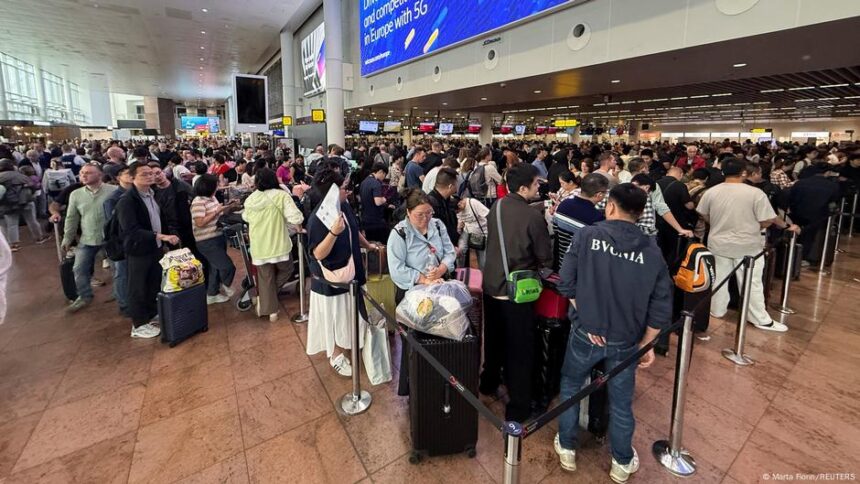
Operations at several major airports across Europe were severely disrupted on Saturday due to a cyberattack that targeted the service provider responsible for check-in and boarding systems. The incident has caused considerable challenges for both passengers and airline operations.
Brussels Airport announced that its flights for Sunday would also be affected. A spokesperson urged airlines to cancel approximately half of the scheduled departing flights to mitigate the impact of long queues and potential late cancellations, emphasizing the need for efficient management of the situation. Passengers scheduled to fly on Saturday were advised to confirm their travel arrangements with airlines before proceeding to the airport.
The cyberattack, which reportedly occurred on the night of Friday, September 19, has led to widespread delays and cancellations across major airports, including those in London, Berlin, and Brussels. According to statements from Brussels Airport, the attack has significantly disrupted flight schedules, resulting in hundreds of flights being affected. The exact perpetrators of the cyberattack remain unknown.
Aviation data provider Cirium reported that 29 flights had been canceled thus far between Heathrow, Berlin, and Brussels. Specifically, Heathrow had 651 departures scheduled for Saturday, while Brussels and Berlin had 228 and 226 departures, respectively.
Collins Aerospace, the service provider impacted by the breach, confirmed to AFP that the disruptions were related to its MUSE software at multiple European airports. While the company stated that the impact has been largely contained to electronic customer check-in and baggage drop services, they acknowledged that these issues could be temporarily alleviated through manual check-in processes.
In addition to the disruptions at Brussels, Heathrow also reported delays stemming from a “technical issue” at a third-party supplier. Meanwhile, Berlin’s Brandenburg Airport communicated through its website about extended waiting times at check-in due to problems at a system provider. Dublin and Cork Airports in Ireland also indicated that they were experiencing minor impacts from the ongoing situation.
This latest cyber incident follows a previous hacking of an airport website in St. Petersburg, Russia, raising concerns about the security of critical infrastructures across the continent as the effects of cyber warfare become more pronounced in everyday operations.