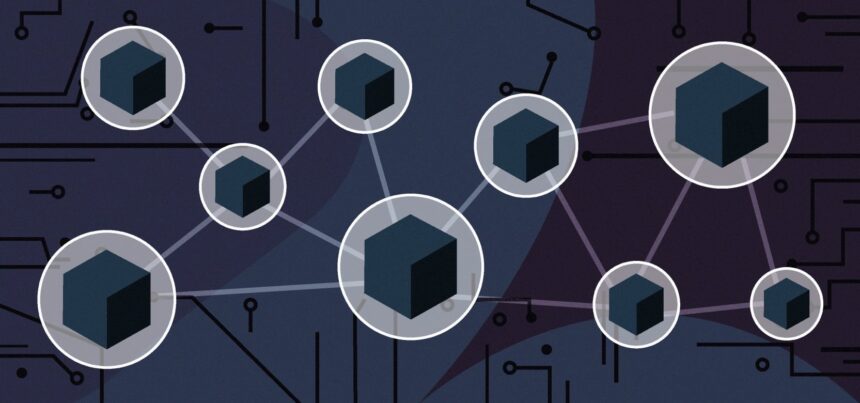
In recent discussions surrounding advanced distributed ledger technologies, a significant focus has turned towards Directed Acyclic Graphs (DAGs) as a transformative alternative to traditional blockchain systems. Unlike blockchain, where transactions are organized into sequential blocks, DAG structures operate on a model where each transaction is recorded as a node or vertex that directly references and validates earlier transactions. This unique architecture allows for a graph-like structure that promotes simultaneous transaction processing, eliminating the reliance on traditional mining and block creation methods.
One of the standout advantages of DAG technology lies in its ability to facilitate high throughput rates, often surpassing those of conventional blockchains. Notable projects utilizing DAG-based architectures, such as IOTA, Nano, Fantom, and Hedera, have reported transaction speeds that can reach thousands per second, coupled with near-zero fees and enhanced energy efficiency compared to proof-of-work chains.
DAG transactions follow a distinctive validation process wherein a user initiating a transaction must first confirm one or more unconfirmed transactions, referred to as “tips.” Once validated, the new transaction becomes part of the graph, available for further validation by subsequent users. This model cultivates a self-sustaining cycle that accelerates network growth and performance as more participants engage.
Significant structural differences between DAG and blockchain technologies further highlight their unique benefits. For instance, while blockchain employs a linear arrangement of data in blocks, DAG organizes transactions as individual nodes that reference multiple previous transactions. This deviation allows for faster consensus among nodes since DAG networks utilize a gossip protocol, enabling data transmission to occur at exponentially increasing speeds.
Moreover, scalability concerns often plague traditional blockchains, where increased user participation can lead to congestion and longer transaction times. In contrast, DAG networks tend to improve performance with increased activity, as parallel validation processes allow multiple transactions to occur simultaneously.
Despite these advantages, DAG technology is not without its challenges. Security vulnerabilities at low transaction volumes present a significant concern, as the security of DAG systems relies heavily on sustained transaction activity. Additionally, many DAG networks face centralization issues during their early growth stages when initial structures may require centralized checkpoints for validation. For instance, IOTA historically utilized a Coordinator to facilitate transactions until sufficient decentralization was achieved, raising questions about the overall decentralization of such systems.
Interoperability remains another hurdle, with varying protocols and rules across different DAG implementations making cross-network communication challenging. This lack of standardization contrasts sharply with the more mature blockchain ecosystem, where a wider range of tools and community resources is readily available.
The debate over whether DAG technology could eventually replace blockchain has sparked much interest within the cryptocurrency community. However, industry experts suggest that both technologies may coexist, each excelling in specific contexts. While blockchain continues to provide robust security and solid decentralization, DAG offers advantages in speed, lower fees, and energy efficiency, particularly suited for use cases like micropayments and IoT transactions.
Projects like IOTA, Nano, Fantom, and Hedera illustrate the diverse applications of DAG technology. IOTA, for instance, has developed the Tangle for efficient machine-to-machine transactions in the Internet of Things, while Nano’s block-lattice design allows for instant, feeless transfers. Fantom’s Lachesis consensus mechanism enables fast and secure validation without traditional blocks, and Hedera employs a hashgraph for rapid transaction finality and predictably low fees.
In conclusion, as both DAG and blockchain technologies continue to evolve, the idea of creating hybrid solutions that leverage each architecture’s strengths is gaining traction. The distributed ledger landscape is likely to accommodate both systems, serving varied use cases and fulfilling the diverse needs of their respective communities.