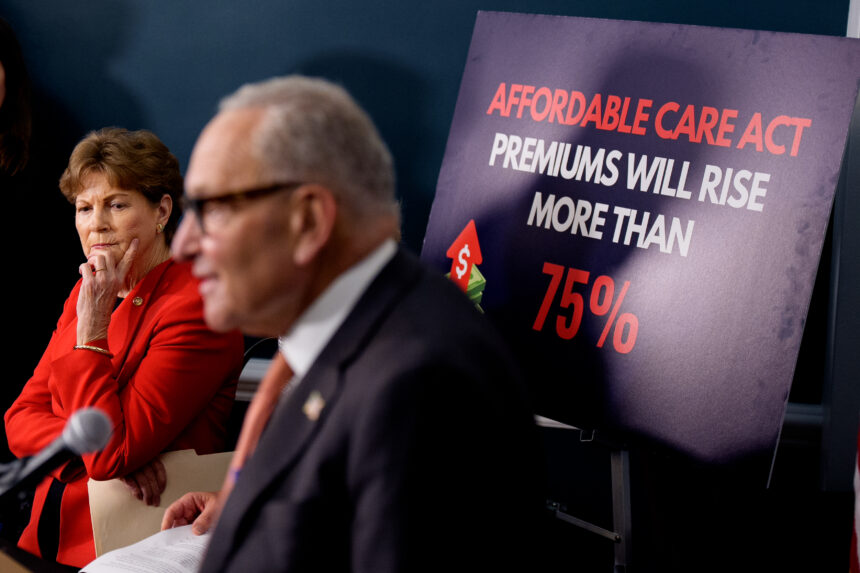
As lawmakers work diligently to avert a federal government shutdown, another critical deadline looms with significant implications for health care coverage nationwide. Key tax credits central to the Affordable Care Act (ACA), commonly known as “Obamacare,” are set to expire, casting a shadow of uncertainty over the coverage of millions of Americans who depend on these subsidies to make their health plans affordable.
In Texas, the impact of this potential lapse could be particularly pronounced. The state has witnessed a remarkable surge in ACA enrollment, tripling since 2020, with nearly 4 million Texans currently benefiting from the program. Recent analysis from KFF, a nonpartisan organization that provides health policy research, indicates that if these enhanced tax credits are not renewed, premiums could skyrocket—more than doubling from an average of approximately $888 this year to over $1,900 by 2026. This shift could impose significant financial burdens on families across Central Texas.
Alec Mendoza, a public advisor with Texas 2036, emphasized that while many may fear skyrocketing costs, there are still opportunities for Texans to maintain affordable coverage. “We want people to know that there are low-cost or no-cost plans that are out there for them and their families,” he stated. Mendoza acknowledged that although premium increases are expected, the situation is not hopeless. “They need to shop for these plans themselves and really compare their options, because there are options out there.”
In Travis County alone, about 145,000 residents are enrolled in ACA plans. The KFF calculator illustrates that a 21-year-old in the county earning approximately $37,650 annually could see their yearly premium rise by nearly $1,700 if the tax credits are allowed to expire.
On the federal front, Dr. Mehmet Oz, Administrator of the Centers for Medicare and Medicaid Services, noted that discussions regarding potential replacements for the ACA are ongoing. However, he indicated that few specifics have been solidified. “These are ideas that we’re still working on in part because until the government shutdown formally ends, we don’t have all the people in the room we need to work on these programs,” Oz remarked.
In Congress, Democratic leaders are advocating for swift action to preserve the affordability of health care. Senator John Fetterman of Pennsylvania expressed strong support for the tax credits, stating, “I want to make health care more affordable for Obamacare, but I also think that our government should never be held hostage. We need to find a way forward because I strongly, strongly support those tax credits to make health care more affordable.”
As open enrollment continues through January, the looming specter of increased premiums remains at the forefront. Without Congressional action to renew the credits, these elevated prices would take effect in the 2026 plan year, leaving many uncertain about their health coverage options in the near future.