







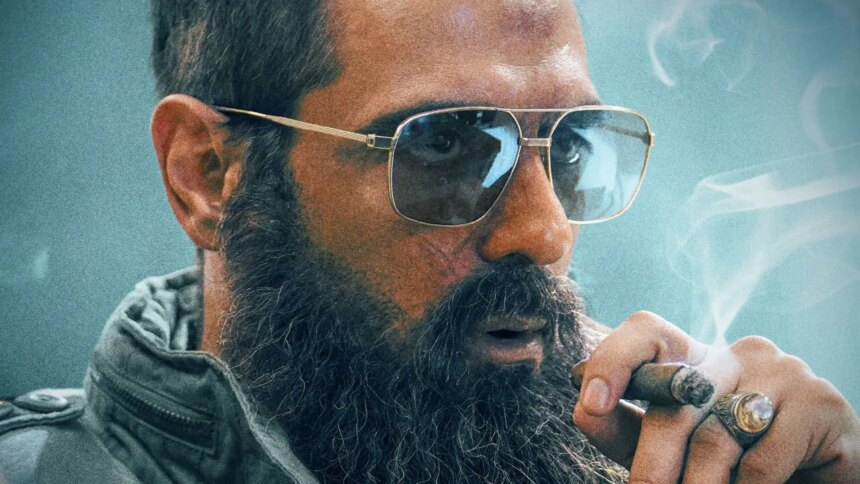
Now playing in U.S. theaters nationwide, Aditya Dhar’s latest film, Dhurandhar, weaves a complex narrative that fuses action and psychological depth against a backdrop of socio-political turmoil. Marketed as a jingoistic gangster epic, the film earns attention for its audacious storytelling, which occasionally blurs the lines of moral clarity, making it both thrilling and unsettling.
Dhurandhar is framed as “inspired by incredible true events,” yet viewers may question the veracity of its claims. The story centers on Hamza Ali Mazari, portrayed with intensity by Ranveer Singh, an Indian military operative who goes undercover in mid-2000s Pakistan. As he navigates through Karachi’s murky politics, initially starting from a modest juice stall, Hamza infiltrates a local mafia, which plays a crucial role in both national and international conflicts. The film presents a relentless stream of violent action that evokes comparisons to horror films like Saw, showcasing brutal scenes of torture and bloodshed.
The plot thickens as Hamza becomes increasingly entangled with the very criminals he is surveilling, leading to a poignant conflict between loyalty and duty. The narrative takes a dark turn when it becomes clear that his associates are setting the stage for the 2008 Mumbai terror attacks. While films like The Attacks of 26/11 and Hotel Mumbai have tackled this subject matter previously, none have done so with the cinematic panache that Dhurandhar attempts, despite inventing its own dramatic fabrications.
Integral to the film’s appeal is its parade of characters who mirror real-life figures. Akshaye Khanna’s portrayal of Rehman Dakait—a Karachi gangster with a paternal side—stands out, offering a humanizing angle to the understated but dangerous world of crime. Sanjay Dutt’s Chaudhary Aslam, depicted as a morally ambiguous police officer, adds layers to the movie’s narrative complexity. R. Madhavan’s character, Ajay Sanyal, reflects characteristics of real security officials, blurring the line between fact and fiction in service of the film’s agenda.
One of the film’s most controversial elements is its handling of contemporary themes, particularly its provocative portrayal of Islamic militants. Lines of dialogue laden with nationalist fervor and an exploration of anti-terrorism tactics reflect the current socio-political climate in India, fostering questions surrounding its implications for Muslim communities. In key emotional moments, the film presents Hamza’s struggle against supposed Islamic invaders, intertwining personal vendettas with broader societal injustices, framing his journey through the lens of deteriorating ethics.
Yet, beneath its action-packed facade lies a moral ambiguity that challenges conventional heroism. Hamza’s character oscillates between a vengeful anti-hero and a deeply flawed individual. The complex portrayals of Dakait and his crew soften the viewer’s perception of antagonism, creating emotional stakes that deepen Hamza’s eventual betrayal. The film’s depiction of violence—intense and stylized—serves as both a commentary and a spectacle, expertly captured by cinematographer Vikash Nowlakha and editor Shivkumar V. Panicker, whose pacing alternates between grandiosity and grounded brutality.
Dhurandhar runs a hefty three-and-a-half hours, yet it propels its audience through heart-pounding sequences that leave little room for complacency. It culminates in a cliffhanger, signaling a sequel on the horizon, while also resonating with its high-energy beats, fueled by contemporary music that complements its thematic undertones.
As audiences grapple with the cognitive dissonance of Dhurandhar’s narrative—one that triumphs in its craft yet flirts dangerously with divisive political undertones—they find themselves caught in a moral whirlwind. The film, described as an experience that is “disturbingly good,” poses a challenge: can one appreciate the artistry while confronting its darker implications? Thus, Dhurandhar stands as a provocative entry in Bollywood’s cinematic landscape, inviting viewers to engage with its many layers while navigating its perilous themes.


