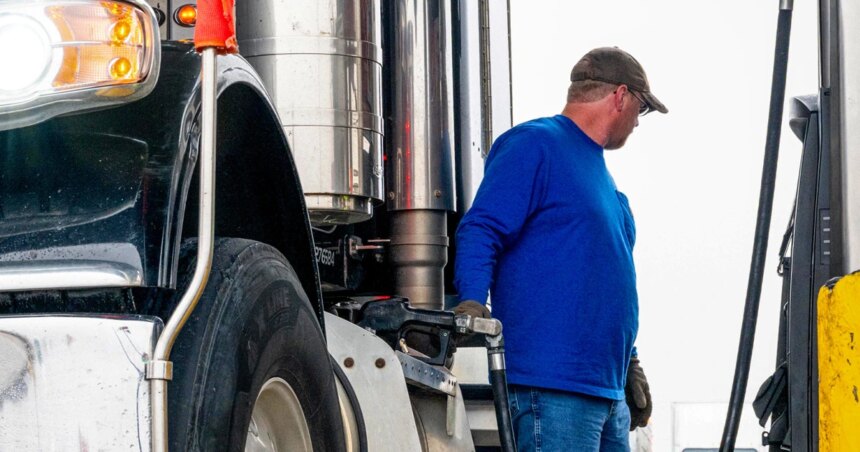
The nationwide average price of diesel fuel has surged to $5.04 per gallon, primarily driven by escalating crude oil prices resulting from Iran’s blockade of the strategically vital Strait of Hormuz. This critical passage enables the transit of a significant portion of the world’s oil, and its disruption is reverberating throughout the global economy. Diesel fuel, a refined derivative of crude oil and biomass, is essential for powering various vehicles, including freight and delivery trucks, public transport, ships, and heavy machinery used in agriculture and construction.
According to AAA, the last time diesel prices exceeded the $5 mark was in December 2022, highlighting the recent volatility in fuel costs. Although most consumers do not drive diesel-powered vehicles, the implications of these prices extend far beyond the gas station, affecting the broader supply chain. Paul Dietrich, chief investment strategist at Wedbush Securities, emphasized that diesel fuel is critical for transporting goods essential to everyday life, including food, packages, and construction materials. “If the Iran war keeps diesel prices elevated, this becomes a direct hit on consumer prices,” he stated, forecasting higher grocery prices and increased delivery costs that will strain household budgets.
The rise in diesel prices has been particularly swift. Just a month prior, the national average stood at approximately $3.65 per gallon, indicating a sharp increase felt most acutely by farmers and those in logistics-heavy industries. John Boyd Jr., a Virginia farmer producing soybeans, corn, and wheat, expressed concern over the heightened financial burden: refilling his tractor now costs around $500 due to current diesel prices, which he described as a substantial expense impacting his operations.
Compounding the issue, the cost of fertilizers—critical to agriculture—is also spiraling upwards due to the Iran conflict. Approximately one-third of global fertilizer components transit through the Strait of Hormuz, adding further strain on farmers like Boyd, who have limited ability to offset these rising production costs. While many Americans may not purchase diesel fuel directly, they will inevitably feel the economic repercussions in the form of inflated prices for gasoline. On the same day that diesel prices reached new heights, the national average price for unleaded gas surged to $3.79 per gallon, up from $2.92 a month ago.
This spike in fuel costs comes at a precarious time for American consumers, who have already been grappling with years of rising inflation affecting the prices of groceries and other essentials. Dietrich noted that higher fuel expenses effectively serve as a tax on households, leaving less disposable income for discretionary spending on dining, travel, and entertainment.
As fuel prices continue to escalate due to geopolitical tensions, experts warn that the effects will ripple through the economy. Increases in delivery charges from logistics companies like UPS and FedEx are already being seen, with additional surcharges being added for services in and out of the conflict-affected Middle East. Similarly, commercial airlines are adjusting ticket prices and fuel surcharges as jet fuel costs rise.
Initially, the impact on grocery prices may seem minimal, particularly for items that are less dependent on fuel-intensive transportation, but experts indicate that the ramifications will gradually permeate throughout the market. According to Michael Adjemian, a professor at the University of Georgia, the effect on food prices will initially manifest in perishable and transport-intensive items but will eventually be felt by consumers at large.
The ongoing conflict has created significant unrest within the shipping industry, generating uncertainty about how prices for freight and container shipping may be influenced in the future. With traditional pricing models disrupted, both crude oil carriers and freight vessels face a complex landscape. It remains uncertain when normalcy will resume for maritime freight operations, particularly if tensions continue.
In a recent statement, the Trump administration expressed optimism that the spike in oil prices, along with the associated financial burdens, would soon subside once military operations cease. President Trump assured, “When this is over, oil prices are going to go down very, very rapidly. So is inflation. So is everything else,” emphasizing the priority of addressing the nuclear threat posed by Iran. Yet for farmers like Boyd, such assurances offer little solace. “I keep watching the news and the president says, ‘Oh, these things are temporary,’” he remarked. “They’re not temporary for me.”