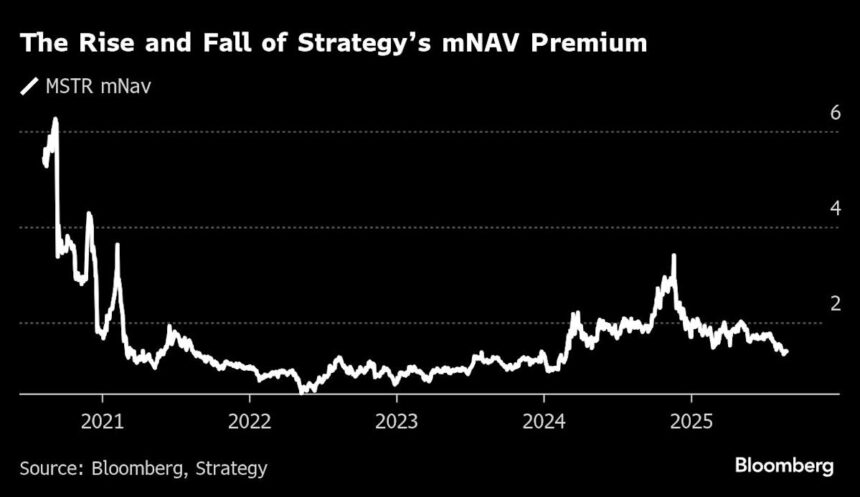
In recent weeks, the trend of digital-asset treasury companies (DATs) has shown alarming signs of instability, reflecting the volatile landscape of the cryptocurrency market. Once viewed as an innovative way to tap into the burgeoning realm of digital assets, the stock prices of these firms have plummeted sharply, raising concerns about the long-term sustainability of their business models.
These companies, which primarily invest in cryptocurrencies to bolster their treasury reserves, have seen average declines of 15% in share prices over the last week, according to financial advisory firm Architect Partners. The downward spiral includes notable cases such as ALT5 Sigma Corp., which has lost approximately 50% of its value in just over a week, and Kindly MD Inc., whose stock has plummeted around 80% from its peak in May.
Market dynamics appear to be overwhelmingly unfavorable, especially as Bitcoin purchases among treasury firms sharply declined from 66,000 BTC in June to just 14,800 BTC in August. The average size of purchases has also taken a drastic hit, dropping from a high of 2,025 BTC to just 343 BTC last month. This slowdown in the accumulation of Bitcoin is indicative of a broader loss of market confidence and appetite for riskier assets.
As DATs proliferate—many emerging within the last year, often with little differentiation in their offerings—market participants are becoming increasingly cautious. The landscape has seen companies with varying backgrounds pivoting to crypto, such as former nail salons and cannabis businesses, diluting the potential for meaningful investment differentiation.
Despite these challenges, a handful of companies have managed to capture investor interest. For example, shares of Eightco Holdings Inc. skyrocketed more than 3,000% after announcing a bold plan involving Worldcoin. This highlights that, although the market is rife with uncertainty, there are still avenues for speculation and discovery.
However, the combination of numerous companies entering the market and a dearth of distinctive strategies has led to growing concerns about oversaturation. The ongoing decline in share prices may trigger a potential consolidation phase, as weaker players struggle and seasoned companies eye their token assets as potential acquisition targets.
Moreover, Nasdaq has started enforcing stricter regulations on companies holding tokens, requiring some to seek shareholder approval for issuing new shares aimed at funding token purchases. This shift underscores the changing regulatory environment that DATs must navigate.
Emerging financing options tailored for these companies, such as Bitcoin-backed loans, have drawn attention as innovators adapt to a challenging financial landscape. Nevertheless, the resilience of such financing structures remains uncertain, and some industry insiders are left questioning the long-term viability of the DAT model.
The future of these companies appears precarious. Investors are increasingly asking themselves why they should invest in a company layered with expenses and risks rather than directly holding cryptocurrencies or engaging with ETFs. As sentiment continues to wane, many individuals are hesitant to venture into this complex and turbulent market, pondering whether the current landscape reflects the twilight of a speculative cycle rather than a sustainable investment opportunity.