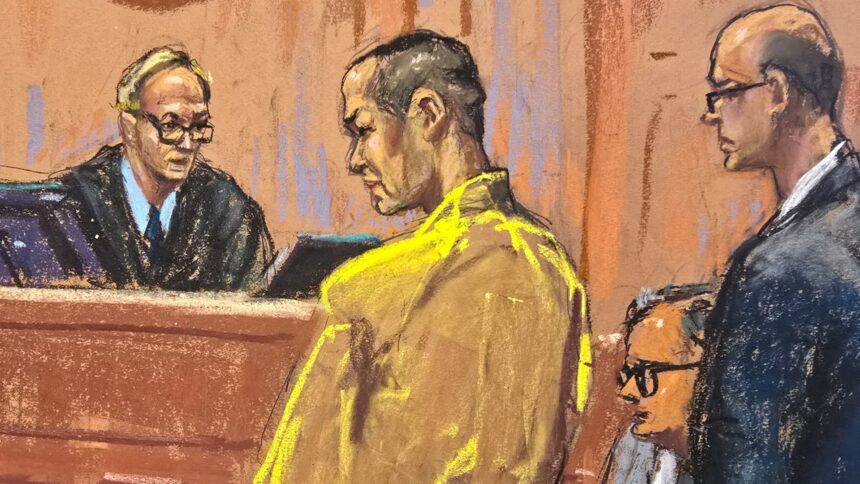
Do Kwon, the 34-year-old South Korean cryptocurrency entrepreneur, has been sentenced to 15 years in prison following a conviction for fraud linked to the collapse of his digital currencies, TerraUSD and Luna, which collectively lost investors an estimated $40 billion in 2022. U.S. District Judge Paul A. Engelmayer condemned Kwon during the sentencing, labeling his actions as an “epic fraud” that caused unprecedented damage to everyday investors.
During the court proceedings held in Manhattan, Judge Engelmayer criticized Kwon for his repetitive dishonesty towards investors who had entrusted him with their savings, stating that few fraud cases in the history of federal prosecutions have resulted in such widespread harm. Kwon appeared before the judge wearing prison attire and offered a heartfelt apology to the victims, many of whom had shared their devastating experiences through letters submitted to the court.
One victim, Ayyildiz Attila, detailed his personal loss, stating that he suffered between $400,000 and $500,000 due to Kwon’s actions, which eradicated years of savings and financial stability. Attila expressed his emotional turmoil, noting that his dreams and hard work had been dismantled.
Kwon’s legal representative, Sean Hecker, mentioned in a post-sentencing email that Kwon’s expressions of remorse were sincere and that he would strive to make amends. U.S. Attorney Jay Clayton accused Kwon of orchestrating elaborate schemes to artificially inflate the value of his cryptocurrencies before evading accountability as the situation deteriorated.
The prosecution had sought a substantial prison term of at least 12 years, emphasizing the scale of the financial devastation caused by Kwon’s cryptocurrency crash. Meanwhile, Kwon’s defense team requested a much lighter sentence, suggesting a maximum of five years, allowing him to return to Korea to address additional criminal charges looming against him there.
Kwon faced multiple charges, including securities fraud, wire fraud, and money laundering conspiracy, as the fallout from the cryptocurrency collapse triggered a broader crisis within the digital asset market. The specifics of Kwon’s fraudulent actions included misleading investors about the stability of TerraUSD, a stablecoin pegged at $1. Prosecutors contend that rather than restoring the coin’s value through legitimate means, Kwon manipulated the market by facilitating secret purchases through a trading firm.
He previously pleaded guilty to conspiracy to defraud and wire fraud in August, admitting to making misleading statements about the measures taken to restore TerraUSD’s value. As part of a civil settlement, Kwon agreed to pay $80 million and faced a ban on cryptocurrency transactions, all while reaching a comprehensive $4.55 billion agreement with the U.S. Securities and Exchange Commission.
In addition to his U.S. sentencing, Kwon continues to navigate potential legal troubles in South Korea. As part of his plea agreement, prosecutors expressed willingness to consider Kwon’s application for transfer to his home country once he has served half of his sentence in the United States.