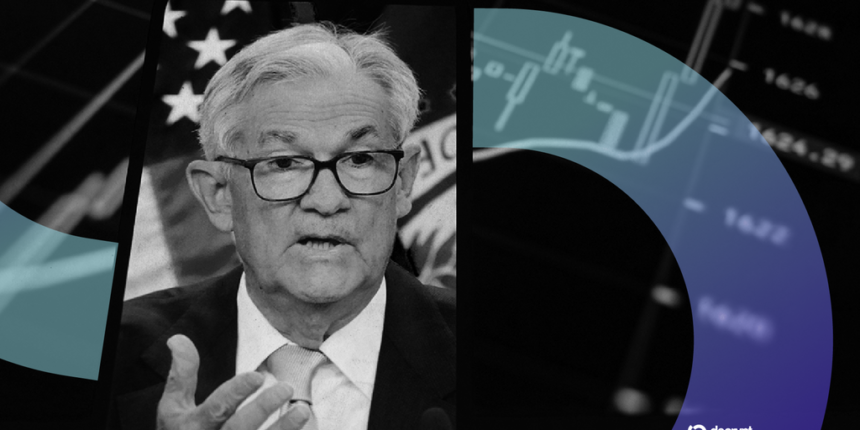
In a groundbreaking legal maneuver, the U.S. Department of Justice (DOJ) has initiated a criminal lawsuit against Jerome Powell, the current Chairman of the Federal Reserve. This unprecedented action has stirred significant concerns regarding the independence of the central bank, with Powell denouncing the investigation as a “pretext” for political interference aimed at influencing the Fed’s interest rate decisions. His assertion has found support among Republican lawmakers, including Senator Thom Tillis, who describes the lawsuit as a blatant attempt to undermine the Fed’s autonomy.
The investigation reportedly focuses on allegations that Powell misled Congress concerning a renovation project at the Fed’s headquarters. In his defense, Powell labeled the inquiry as an assault on the Fed’s ability to operate free from political pressures. He emphasized the importance of the Fed’s capacity to set monetary policy based on economic realities rather than succumbing to intimidation or coercive tactics.
Market analysts are closely monitoring the implications of this legal struggle. Jimmy Xue, co-founder and COO of quantitative yield protocol Axis, remarked that the investigation introduces “a new layer of uncertainty to the macro front.” He noted that the challenges to central bank autonomy could reinforce Bitcoin’s narrative as a “neutral” asset that operates independently of political and legal entanglements, attracting institutional investors seeking a hedge against potential risks stemming from compromised monetary institutions.
Initial market reactions to the investigation indicated a flight to haven assets, as gold and silver prices soared nearly 2% and 5%, respectively, while Bitcoin saw a modest increase of 1.7%, reaching $92,000 according to CoinGecko data. The market’s response suggests a growing unease about the implications for financial stability.
The case being overseen by U.S. Attorney for the District of Columbia Jeanine Pirro—a Trump appointee—has drawn bipartisan critique, especially from within the Republican Party. Senator Tillis has pledged to block all Federal Reserve nominations, including the imminent Chair vacancy, until the issues surrounding Powell’s lawsuit are adequately addressed. Critics argue that this escalation represents a consolidation of executive power that could jeopardize the credibility of both the DOJ and the Federal Reserve.
Experts express concern about the long-term ramifications should the DOJ’s case gain traction. Tim Sun, a senior researcher at HashKey Group, cautioned that a successful prosecution could establish a perilous precedent whereby a President might utilize judicial means to impose their monetary policy preferences on a central bank chair. Such an outcome could undermine the foundation of the U.S. dollar system and erode confidence in both the dollar and U.S. Treasury securities.
In the immediate future, market volatility is expected to rise, with potential distortions in the yield curve. While Sun anticipates heightened fluctuations in risk assets—including Bitcoin—he also recognizes the possibility that, in the longer term, Bitcoin could evolve into an institutional hedge as investors begin to factor in risks associated with political interference over monetary policy.
Despite these discussions, Bitcoin currently remains closely tied to the fluctuations of the dollar, suggesting that while a shift may be on the horizon, significant developments will first need to unfold. The situation presents a complex dynamic that could lead to major changes in how market participants view and utilize non-sovereign assets in response to evolving trust in traditional monetary authorities.