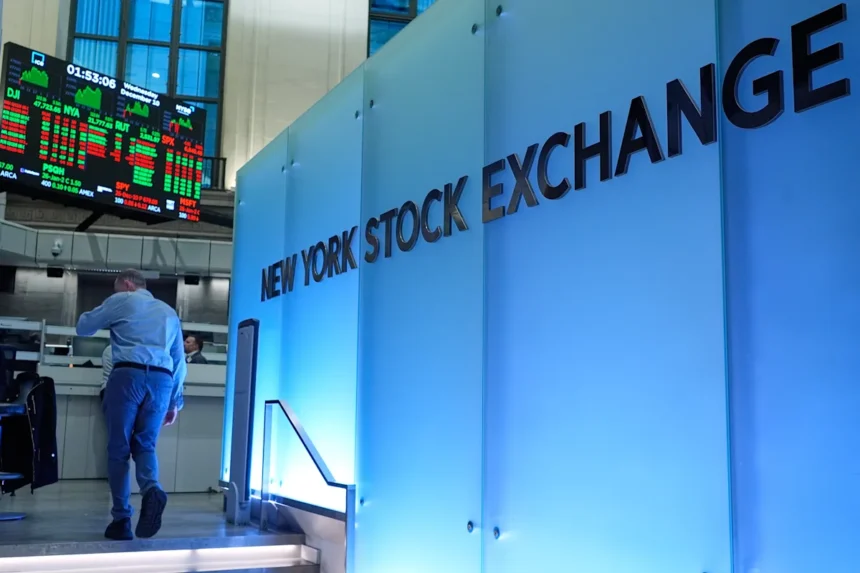
On Thursday, the Dow Jones Industrial Average showed significant strength, nearing a record high as U.S. stock indices displayed mixed performance. The Dow gained approximately 1.3%, translating to an increase of around 600 points, and reached an intraday high, while the S&P 500 and the tech-heavy Nasdaq Composite faced downward pressure. The S&P 500 edged up by nearly 0.2%, continuing the gains from the prior day following the Federal Reserve’s recent interest rate cut. Conversely, the Nasdaq Composite fell by 0.6%, as concerns surrounding artificial intelligence (AI) spending resurfaced, primarily following Oracle’s disappointing earnings report.
Oracle, which released its earnings report late Wednesday, stirred worries across technology sectors as it missed cloud sales expectations and announced a significant $15 billion increase in its data center spending. In response to these revelations, Oracle’s stock tumbled as much as 16%, raising alarms about inflated tech valuations and the financial risks tied to large investments in AI.
Amid this backdrop, the Federal Reserve’s decision to lower rates for the third time in the current year further captured market attention. Fed Chair Jerome Powell indicated a cautious path ahead regarding monetary policy while highlighting the resilience of the U.S. economy. Powell suggested that tariffs enacted during the Trump administration had contributed to inflation, which was viewed as a transitory issue. Investors took note of a surprising jump in initial jobless claims, which rose to 236,000—marking the most significant increase since 2020 after hitting a three-year low. This data release is particularly notable as it sets the stage for the upcoming November jobs report.
In international trade news, the U.S. trade deficit unexpectedly narrowed to the smallest margin in over five years, driven by a surge in exports that may signify a boost to economic activity during the third quarter. As firms continue to report earnings, attention also turns to companies such as Broadcom, Costco, and Lululemon, which are due to release their results soon.
Tech stocks were notably impacted; Nvidia saw a dip of over 3.5% as investor sentiment soured on AI spending following Oracle’s earnings fallout. The company’s shares have fallen roughly 8% over the past month as worries about unsustainable AI development costs persisted.
In another sector, natural gas prices continued to plunge, largely driven by mild winter weather forecasts and high production levels. Futures for natural gas have dropped more than 16% within a week, reaching below $4.30.
Oil prices also reflected market volatility, with international benchmark Brent crude declining by around 2.1% amid escalating tensions related to the seizure of a crude tanker by the U.S. Coast Guard and OPEC’s predictions for a balanced market in 2026 contrasting with market analysts’ warnings of potential oversupply.
Looking ahead, analysts express optimism for long-term market growth, with Fundstrat co-founder Tom Lee projecting an S&P 500 target of 7,700 by the end of 2026, driven by technological advancements and economic growth. This outlook aligns with several forecasts predicting favorable conditions for the index in the coming years.
Overall, as economic indicators and earnings reports surface, investors remain attentive to potential shifts in market trends while navigating the complexities of varied sector performances.