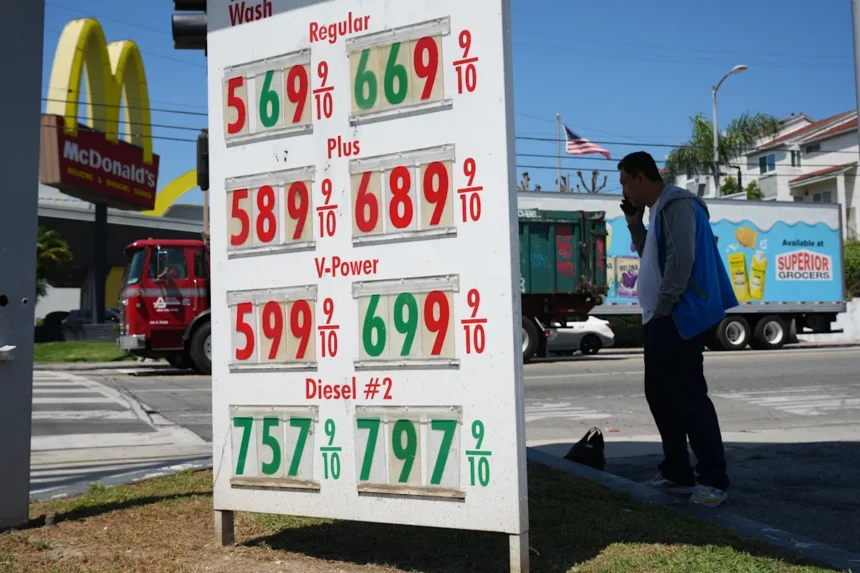
In a quest to escape soaring gas prices in the Seattle area, Junelle Lewis recently discovered a budget-friendly alternative at the Tulalip Market, situated on the Tulalip Reservation. With gas prices averaging around $4.84 per gallon—approximately 75 cents lower than those near her home—Lewis felt compelled to make the drive. “Gas is ridiculous. But I have found, honestly, over the years, this gas station specifically is cheaper than a lot around here,” she remarked while filling up her Chevrolet Suburban.
Lewis’s experience is not unique. Many drivers are turning to Native American reservations, where gas prices often remain significantly lower due to state tax exemptions. This trend is particularly notable across several states, including California, New Mexico, New York, Oklahoma, and Washington, where tribally owned stations are strategically located, sometimes along busy travel routes.
The search for cheaper fuel has been made easier thanks to apps like Gas Buddy, which help users find the most economical gas stations. Nationally, gas prices have surged over $1 since the onset of the Iran war on February 28, pushing the average cost to approximately $4.15 per gallon, with predictions that prices will continue to climb and fuel inflation in the weeks ahead.
In states like New Mexico, residents have found even more significant savings. For instance, Jamie Cross took advantage of the Mescalero Apache Reservation where gas was recently priced as low as $3.79 per gallon. Similarly, in eastern New York, stations within the Cattauragus Indian Territory offered gas for around $3.65, undercutting local competitors by about 50 cents.
The underlying reason for these lower prices lies in tax exemptions. While federally recognized tribes are still subject to federal fuel taxes, state fuel taxes do not apply, allowing them to offer more competitive prices. According to Dan Lewerenz, a law professor focused on Native American legal matters, courts have upheld the principle that states cannot levy taxes on tribal lands for over a century. However, complexities arise based on various agreements and specific court rulings regarding fuel taxation on tribal lands.
The economic model of gas stations on tribal lands goes beyond just fuel sales. Convenience stores often serve as critical supply points in areas lacking access to full grocery stores. Matthew Klas, a consultant specializing in tribal businesses, noted that many tribal gas stations are the primary source for affordable groceries and household items in remote locations.
Tribal-owned gas stations also play a significant role as revenue generators. Many are located adjacent to casinos, and some offer additional services like drive-through smoke shops or car washes. This revenue helps fund essential community services, as explained by Tanya Burns, CEO of the Tulalip Tribes Federal Corporation. “Like any government, we provide critical services to our people,” she stated, highlighting the reinvestment of rising gas sales into local infrastructure and services.
For many customers, savings are secondary to community values. Todd Hall, who recently filled up his tow truck at a Citizen Potawatomi Nation gas station, noted the lower prices compared to nearby locations, while also expressing support for the tribe’s community involvement.
With inflation and geopolitical tensions driving gas prices higher, travelers continue to seek refuge at tribally owned stations. The Tulalip Market community represents a growing trend that marries affordable fuel with community commitment, making it a viable option for many seeking economical solutions amidst rising costs.