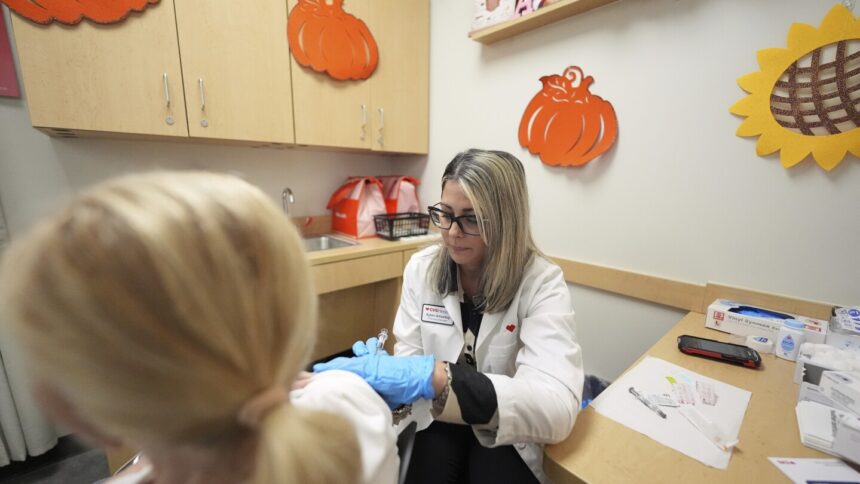
Drugstores across the country are gearing up to distribute the updated COVID-19 vaccines this fall, and insurance providers have announced plans to cover the costs, despite recent decisions from a key government panel regarding the vaccines’ recommendation status.
On Friday, vaccine advisers appointed by Health Secretary Robert F. Kennedy Jr. opted not to issue a strong recommendation for the updated shots. However, they emphasized that individual decisions regarding vaccinations could still be made by the public. Typically, recommendations from this advisory committee to the Centers for Disease Control and Prevention (CDC) are endorsed by the agency’s director, leading to insurance coverage and facilitating vaccine distribution through pharmacies in many states.
Despite the hesitance from some government advisers, insurance companies and officials have confirmed that coverage for the COVID-19 vaccines will persist. The Department of Health and Human Services (HHS) stated that the committee’s recent vote ensures immunization coverage across all payment methods, including Medicaid, the Children’s Health Insurance Program (CHIP), commercial insurance, and the federal Vaccines for Children (VFC) program, which is responsible for funding approximately half of childhood vaccinations in the U.S.
The trade group America’s Health Insurance Plans indicated that its members will cover the vaccines at no cost to patients until 2026, encompassing nearly all major insurers except for UnitedHealthcare. However, UnitedHealthcare will still provide coverage at no cost for standard commercial plans, which include both individual policies and those offered through small businesses.
It is important for recipients of employer-sponsored insurance to note that large employers will determine their own coverage policies regarding the vaccine. Given that vaccines can potentially reduce hospitalizations and costly health care needs associated with severe COVID-19 cases, employers may continue to provide coverage to help mitigate expenses.
Pharmacies are a prevalent choice for vaccinations, with approximately two-thirds of adults opting to get their COVID-19 shots at these locations, while around 30% receive them in doctors’ offices. Following an initial challenging rollout, access to vaccines at pharmacies has improved significantly, allowing chains like CVS to offer updated vaccines nationwide, including in all 50 states and Washington, D.C. Some locations, including CVS and Walgreens in select states, may still require prescriptions.
As for who qualifies for the updated shots, the U.S. has generally recommended annual COVID-19 vaccinations for everyone aged 6 months and older. Recently, the U.S. Food and Drug Administration has approved vaccinations for seniors aged 65 and older, as well as younger individuals and children who are deemed at high risk of severe illness due to underlying health conditions. The CDC outlines a comprehensive list of high-risk conditions including asthma, cancer, heart or lung diseases, obesity, mental health issues, and smoking history—though this list is not exhaustive.
Patients are encouraged to consult their doctors to determine if they qualify as high risk, should their condition not appear on the CDC list. Representatives from CVS and Walgreens have affirmed that their staff will inquire about patients’ health factors to assess eligibility, and no proof will be necessary. Essentially, if a patient identifies themselves as eligible, they will receive the vaccine without additional verification.