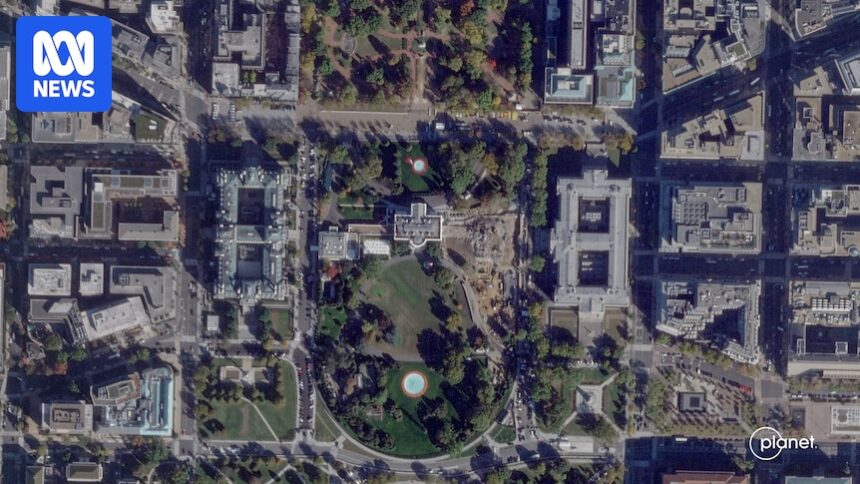
In a dramatic shift to the iconic White House landscape, the historic East Wing has been completely demolished, sparking widespread controversy and criticism. This significant change comes just months after President Donald Trump assured that the planned ballroom would not disrupt the essence of the “people’s house.” The East Wing, a structure that housed the offices of the first lady and her staff since its construction in 1902, began its removal on Monday. By Thursday, reports confirmed that crews had fully dismantled the section, leaving an expansive void in its place.
Addressing reporters in the Oval Office, President Trump emphasized the necessity of demolishing the structure to facilitate a new ballroom, which he claimed would enhance the White House’s grandeur. The President detailed the project’s estimated cost at $300 million, a substantial increase from earlier projections of $200 million. Trump stated he and “some friends” would privately fund the ballroom, thus alleviating taxpayer burden.
However, while White House officials dismissed the uproar as “manufactured outrage,” Democrats have expressed stark discontent. They have raised concerns regarding the decision-making process, questioning whether proper protocols were adhered to during the demolition. Senator Richard Blumenthal criticized the comparisons drawn by Republicans between this project and previous renovations, arguing that while past modifications were reversible, the current demolition is not.
Amid the fallout, the White House released a complete list of donors for the ballroom project, prominently featuring tech heavyweights like Amazon, Alphabet, Apple, Microsoft, and Meta. In response to accusations of opacity surrounding the project, the administration has insisted on its transparency, asserting that publicized images and plans were readily available.
As discussions continue, the demolition aligns with Trump’s broader strategy to redesign the White House, which some argue is the most substantial undertaking in decades. Despite pushback from historical preservation advocates and uncertainty over regulatory oversight for such a significant alteration, the administration indicated plans to submit the ballroom proposal for review by the National Capital Planning Commission (NCPC). This process could involve public meetings where community feedback may be solicited.
Critics within preservation circles are concerned that the proposed 90,000-square-foot ballroom, almost twice the size of the White House itself, might overshadow the historic architecture. Calls for a pause on demolition were made pending this review, but officials have maintained that construction decisions are within their jurisdiction.
As Trump’s administration forges ahead with its ambitious expansion plans, the long-term implications of this overhaul on the historic site continue to be debated, reflecting heightened tensions over preservation versus modernization within one of the nation’s most significant landmarks.