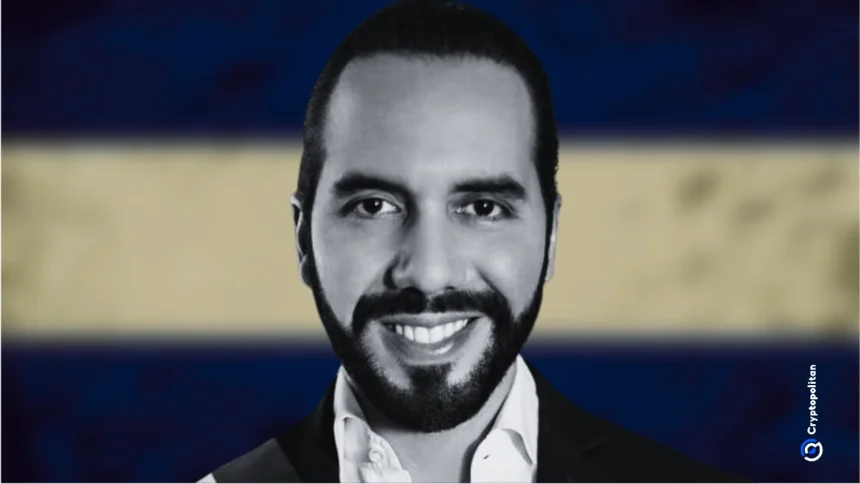
El Salvador has recently acquired an additional 21 Bitcoin, raising its total holdings to 6,313.18 BTC, valued at approximately $702 million. This purchase took place on Bitcoin Day, a significant occasion marking the fourth anniversary of the country’s groundbreaking Bitcoin legal tender law. President Nayib Bukele highlighted that this acquisition is emblematic of Bitcoin’s total capped supply of 21 million coins and aligns with the ongoing strategy of building reserves through the El Salvador Bitcoin Office.
The disclosures from the Bitcoin Office indicate that El Salvador has added approximately 28 BTC over the past week and more than 50 BTC in the preceding month. Since March 2024, data suggests that the nation has been purchasing an average of one Bitcoin per day.
Bukele’s administration enacted the Bitcoin Law in 2021, making El Salvador the first country globally to recognize BTC as legal tender alongside the U.S. dollar. However, the approach to integrating this digital asset has faced criticism. Notably, Nicolas Cary, co-founder and vice chairman of Blockchain.com, voiced concerns at the Token 2049 conference in London. He argued that the government’s top-down implementation lacks the grassroots adoption ethos that crypto advocates typically espouse, while simultaneously acknowledging that El Salvador’s model may offer a precedent for other nations.
The latest Bitcoin acquisition raises questions regarding adherence to a $1.4 billion loan agreement with the International Monetary Fund (IMF) established in December 2024. Under the terms of this agreement, public entities were instructed to halt voluntary Bitcoin purchases. The IMF recognized that the country had committed to a freeze on acquisitions as part of its Extended Fund Facility, which also involved revising the Bitcoin Law to make merchant acceptance of BTC optional while still retaining it as a legal tender.
Despite these modifications, El Salvador’s government has continued to purchase BTC, although it will face increased scrutiny from the IMF, which will evaluate compliance with these agreements through 2027. The IMF stated in July that officials were adhering to commitments not to voluntarily accumulate Bitcoin, suggesting that the country has merely been reallocating funds within internal wallets without increasing its total BTC holdings.
In August, El Salvador undertook a strategic initiative to enhance the security of its Bitcoin treasury by redistributing its assets across multiple wallets, with a cap of 500 BTC per address. The National Bitcoin Office explained that this move was, in part, a precaution against potential threats like quantum computing, which could compromise public-private key cryptography.
According to the IMF, El Salvador’s Bitcoin acquisitions had reached an estimated $300 million by March and had produced over $400 million in unrealized gains at prevailing prices. However, transparency regarding the country’s crypto reserves has been questioned, as unlimited disclosures may hinder a complete independent assessment of its holdings.