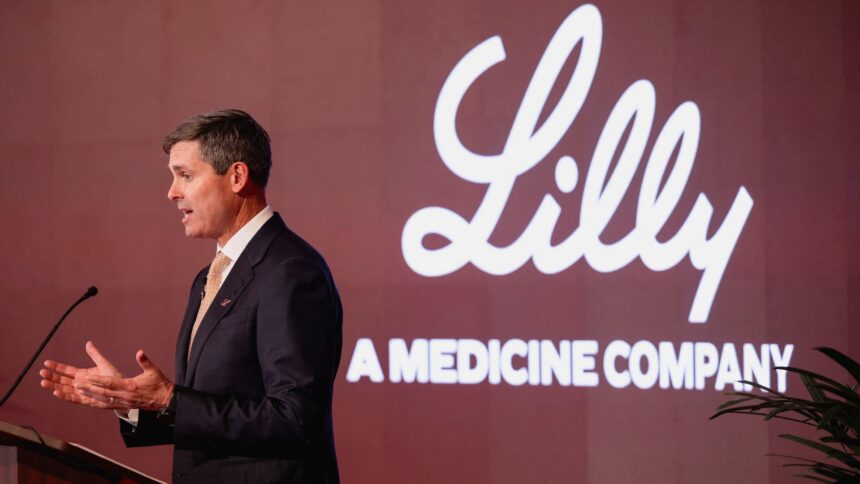
Eli Lilly announced plans for a substantial investment exceeding $3.5 billion to establish a new manufacturing facility in Pennsylvania’s Lehigh Valley, a move aimed at enhancing production capabilities for its next-generation obesity treatments. This facility is expected to play a critical role in the production of retatrutide, a highly anticipated experimental drug that has demonstrated the most significant weight loss results to date in late-stage clinical trials.
This new site in Pennsylvania marks the fourth initiative in a series of planned U.S. manufacturing investments by the pharmaceutical company. Earlier this year, Eli Lilly outlined its vision to allocate at least $27 billion towards the development of new domestic facilities, building upon previous investments totaling $23 billion since 2020. The timeline for the Pennsylvania plant is ambitious, with construction slated to begin within the year and operations projected to commence in 2031.
The expanded production capacity is particularly important as retatrutide is positioned as a strategic component of Eli Lilly’s long-term approach to tackling obesity. Following the success of its injection Zepbound and the anticipated release of an obesity pill, health experts regard retatrutide as a pivotal advancement in treatment options, targeting multiple gut hormones to assist patients with severe obesity.
Lilly plans to unveil results from seven additional Phase 3 trials for retatrutide by the end of the year, adding further anticipation for the drug’s market potential. As competition intensifies, both Eli Lilly and its main competitor, Novo Nordisk, have significantly invested in scaling up production capabilities, especially after facing supply shortages for their current injections in the U.S. market.
The battle for dominance in the growing GLP-1 market is fierce, with Eli Lilly having achieved a majority market share for the first time last year, surpassing Novo. The latter is preparing to launch an innovative GLP-1 pill for obesity, which has already garnered numerous prescriptions, intensifying the competition. Eli Lilly, meanwhile, is gearing up for the potential approval and launch of its own GLP-1 pill called orforglipron later this year.
The urgency behind increasing U.S. manufacturing capabilities has been amplified by discussions surrounding potential tariffs on imported pharmaceuticals, prompted by previous comments from President Donald Trump. However, alleviation of some concerns has occurred due to voluntary drug pricing agreements made between Trump and drug companies, including Eli Lilly and Novo, which shield these firms from tariffs for a period of three years.
As part of its expansion efforts in Pennsylvania, Eli Lilly anticipates the creation of approximately 850 jobs ranging from engineers to lab technicians, in addition to around 2,000 jobs during the construction phase, signaling a significant economic boost for the local community.