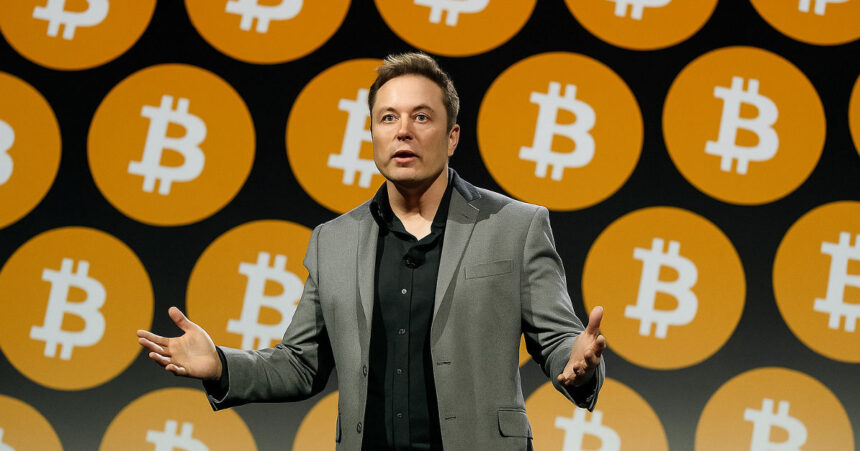
Elon Musk has recently reignited public discussion around Bitcoin after remaining silent on the cryptocurrency for nearly three years. His renewed interest surfaced early Tuesday when he responded to a post from the financial outlet ZeroHedge on the social media platform X. The post highlighted rising prices of gold, silver, and Bitcoin, linking these trends to global monetary debasement spurred by artificial intelligence investments.
Musk’s succinct comment, “True,” prompted a wave of excitement in the Bitcoin community. He elaborated on the economic significance of Bitcoin, stating, “That is why Bitcoin is based on energy: you can issue fake fiat currency, and every government in history has done so, but it is impossible to fake energy.” This statement aligns with the growing narrative of Bitcoin as “digital energy” or “digital gold,” underscoring its perceived value in a landscape where traditional currencies are increasingly questioned.
The conversation quickly drew the attention of pro-Bitcoin figures, including U.S. Senator Cynthia Lummis from Wyoming. Lummis praised Musk for his engagement, suggesting that establishing a Strategic Bitcoin Reserve could potentially secure U.S. debt with a limited, transparent asset. She stated, “Given its scarcity, we can also use it in 20+ years to retire a meaningful % of US debt,” highlighting the long-term implications of integrating Bitcoin into national financial strategies.
This discussion on Bitcoin reserves comes on the heels of a recent Executive Order signed by former President Trump, which established a Strategic Bitcoin Reserve along with a U.S. Digital Asset Stockpile aimed at centralizing government-held cryptocurrencies. The Reserve is reportedly intended to hold $14 billion in seized bitcoin as a store of value, rather than for sale.
Musk’s complex relationship with Bitcoin dates back to early 2021 when Tesla purchased $1.5 billion worth of the cryptocurrency and announced plans to accept it as payment for vehicle purchases. At that time, Musk publicly expressed his support for Bitcoin, describing it as “a good thing” and acknowledging a growing acceptance of Bitcoin in conventional finance. However, his enthusiasm waned later that year due to environmental concerns associated with Bitcoin mining, which relies heavily on fossil fuels. Consequently, Tesla suspended vehicle purchases in Bitcoin and indicated that payments would only resume once the energy sourcing for mining became more sustainable.
In mid-2022, amid a downturn in the cryptocurrency market, Tesla sold approximately 75% of its Bitcoin holdings, a decision that has been the subject of much analysis since the asset’s value has seen significant recovery and growth since then. Tesla’s remaining stash of about 11,509 BTC is currently valued at approximately $1.29 billion, based on recent market data, though the company sold off most of its holdings at an average price of roughly $29,000 per Bitcoin while the asset has since surged to all-time highs around the $126,000 mark.
Following that period, Musk quieted down regarding Bitcoin, often sidestepping questions about the cryptocurrency in interviews. His latest remarks, however, signal a possible shift in strategy or sentiment as market observers watch for further developments.