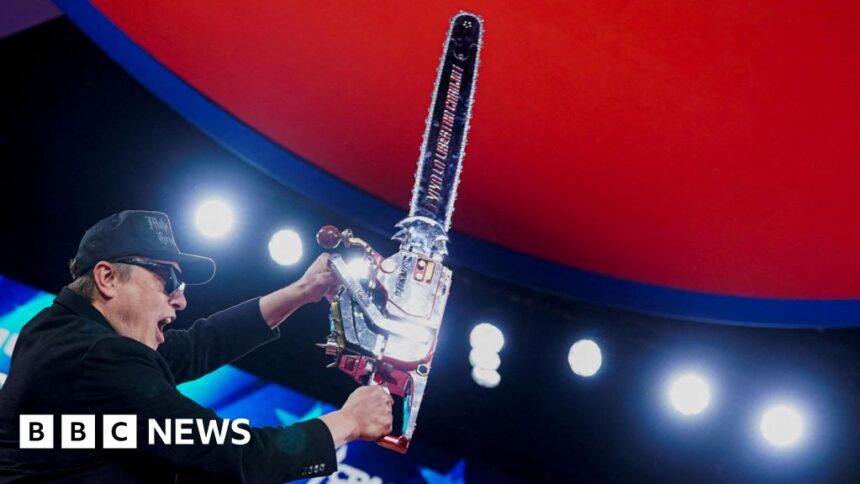
During a recent interview on The Katie Miller Podcast, Elon Musk expressed mixed feelings about his time leading the Department of Government Efficiency (Doge), stating that he would not take on the role again if given the chance. Despite his reservations, he acknowledged that the initiative, established during Donald Trump’s presidency, had some measure of success in its mission to reduce the size of the U.S. government.
Musk resigned from Doge in May after initially projecting savings of up to $2 trillion annually through job cuts and the elimination of various government programs. As of October 4, the Doge website claims to have saved an estimated $214 billion so far this year.
In the nearly hour-long interview, Musk candidly stated, “I mean no, I don’t think so,” when asked if he would engage with Doge again. He expressed a desire to focus more on his companies, remarking that they faced significant challenges during his involvement with the government initiative, particularly regarding vandalism directed at Tesla showrooms and vehicles. This backlash was fueled by his high-profile engagement in political activities, which sparked protests and boycotts against Tesla.
Musk noted Doge’s efforts to minimize government expenditure, emphasizing the importance of keeping government intervention at a minimum. He mentioned that the group had successfully halted funding for programs he considered unnecessary, reflecting a philosophy of limited government oversight.
The inception of Doge coincided with Trump’s return to the White House, created through an executive order on his first day back. While not an official government department, Doge aimed to implement aggressive cost-cutting measures, advocating for a reduced federal workforce and the elimination of agencies such as the U.S. Agency for International Development (USAID). However, some initiatives faced legal challenges or were rolled back, notably when firings linked to bird flu research at the Department of Agriculture prompted the administration to consider rehire.
Musk’s leadership at Doge also strained his relationship with Trump. Initially supportive, Musk donated significantly to Trump’s campaign and was a regular presence at White House events. However, tensions escalated in June when Musk publicly opposed a Trump-backed spending bill, leading to a verbal clash between the two on social media. Trump even threatened to have Doge investigate Musk’s business dealings with the government.
Reflecting on their complicated dynamic, Musk appeared to soften, sharing positive remarks about Trump during his interview. He described the former president as “the funniest person I know” and praised his sense of humor. Their relationship, it seems, has evolved; Musk was seen at a White House dinner with Saudi Crown Prince Mohammad bin Salman, suggesting a potential thawing of their previously frayed ties.