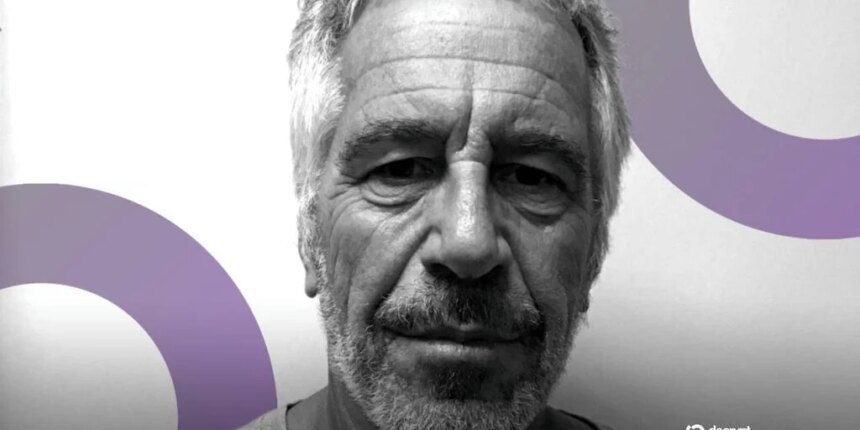
New emails released by the U.S. Justice Department reveal that Jeffrey Epstein made a significant $3 million investment in the cryptocurrency exchange Coinbase back in December 2014. The emails indicate that Coinbase’s leadership, including co-founder Fred Ehrsam, was aware of the deal being arranged on Epstein’s behalf.
The investment was facilitated by Brock Pierce, a co-founder of Tether, and his firm, Blockchain Capital, at a time when Coinbase was valued at $400 million. This substantial investment is particularly noteworthy given Epstein’s criminal history; he was a registered sex offender following a 2008 conviction for procuring a child for prostitution.
Correspondence from Ehrsam on December 3, 2014, reveals his intention to meet with Epstein to discuss the arrangement. In one email, he expressed openness to timing, stating, “I have a gap between noon and 3pm today…but would be nice to meet him if convenient.” Later that same day, Blockchain Capital’s co-founder Brad Stephens confirmed to Ehrsam that they were ready to proceed with the investment, quickly forwarding Coinbase’s wire transfer details to Epstein’s executive assistant, Darren Indyke.
Additionally, a summary of Epstein’s assets disclosed by the DOJ shows a $3,001,000 transaction labeled as a “purchase of Coinbase,” linked to the same LLC mentioned in the communications regarding the equity acquisition.
Epstein’s interest in the crypto space extended beyond Coinbase; he also invested in Blockstream, another key player in the industry. Blockstream co-founder Adam Back acknowledged Epstein’s 2014 investment in a recent post.
While initially considering the investment, Epstein sought advice from notable figures like Reid Hoffman, the founder of LinkedIn. In his response, Hoffman suggested caution, saying, “I probably wouldn’t play,” indicating uncertainty about the internal dynamics at Coinbase.
By 2018, Epstein had sold half of his Coinbase shares back to Blockchain Capital for nearly $15 million, reflecting the dramatic increase in the company’s valuation within just a few years. It is reported that he retained the remainder of his equity. Less than two years later, Epstein’s life came to a tragic end in a Manhattan jail cell while he awaited trial on serious sex trafficking charges.
Information and context surrounding Epstein’s investment activities have sparked renewed scrutiny regarding ethical considerations in venture capital and the responsibilities of companies evaluating investors.