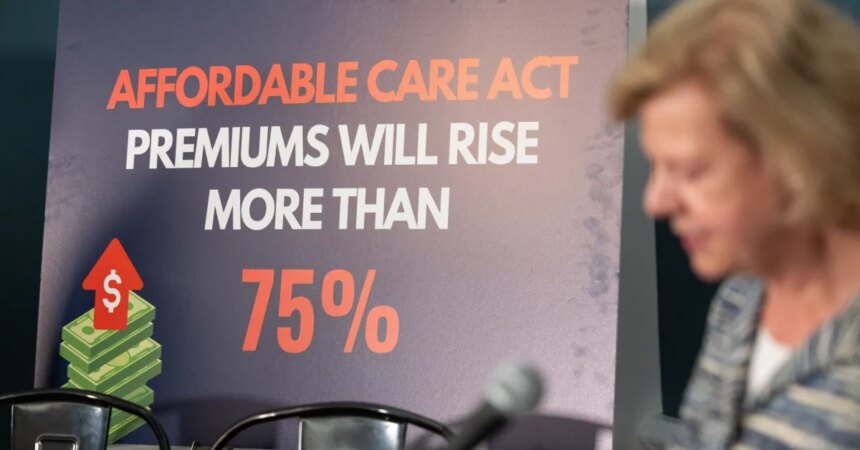
Most Americans relying on health insurance through the Affordable Care Act (ACA), commonly referred to as Obamacare, will begin the enrollment process for 2026 coverage this Saturday. However, millions of households may face significantly higher premiums next year, with analysts estimating an average premium increase of as much as 26%.
The anticipated price hikes are largely attributed to the expiration of enhanced premium tax credits that were temporarily expanded during the pandemic. These subsidies have played a critical role in making healthcare more affordable for many enrollees. As discussions surrounding a government shutdown progress, negotiations over the renewal of these premium tax credits remain unresolved. Lawmakers’ inability to reach a consensus has sparked concerns that without federal action, premiums could surge, with some projections indicating increases of over 100%.
The ACA, enacted 15 years ago, was designed to expand access to affordable healthcare, especially for individuals and families earning between 100% and 400% of the federal poverty level. In 2025, the poverty threshold is set to vary from $15,650 for individuals to $54,150 for families of eight. Additionally, families earning less than 138% of the poverty level may qualify for Medicaid, but several states, including Texas and Florida, have opted out of this expansion.
Consumer advocacy groups and health policy analysts are sounding alarms about the potential impact of premium tax credit expirations. Senate Democratic leader Chuck Schumer criticized Republican lawmakers for their role in the stalemate, asserting that the failure to support the subsidies will lead to steep increases for working families. In stark contrast, Republicans argue that the ACA program encourages inefficiencies and potential fraud.
If the subsidies lapse, the most substantial burden will likely fall on middle-income families who will lose their eligibility for tax credits. For instance, a family in Virginia could witness an astronomical rise in deductibles, jumping from $800 to $20,000. Similarly, families in Idaho and Maryland could see monthly premium increases of $100 and $500, respectively. Moreover, lawful immigrants will also lose access to subsidies in 2026 if their immigration status disqualifies them from Medicaid coverage and their incomes fall below the poverty threshold.
Republican leaders maintain that current provisions are excessively generous. House Speaker Mike Johnson expressed concerns about maintaining benefits that he believes amount to “free healthcare for illegal immigrants.” Simultaneously, Vice President J.D. Vance echoed these sentiments, implying a need for more stringent controls over tax credits to prevent waste and fraud.
Adding another layer of complexity is the “One Big Beautiful Bill Act,” enacted by the Trump Administration in July. This legislation alters ACA eligibility criteria, expected to last until 2034, and potentially disqualifies up to 1.7 million Americans from receiving coverage. Proponents argue that these changes aim to reduce costs and curtail fraud.
The enrollment period for ACA coverage in most states begins on November 1, with a deadline for enrollment or plan changes set for December 15 for coverage commencing on January 1. January 15 marks the final day individuals can enroll or adjust their marketplace health plans for the year, after which changes can only occur if one qualifies for a Special Enrollment Period. For more information on enrollment timelines and procedures, individuals can visit healthcare.gov.