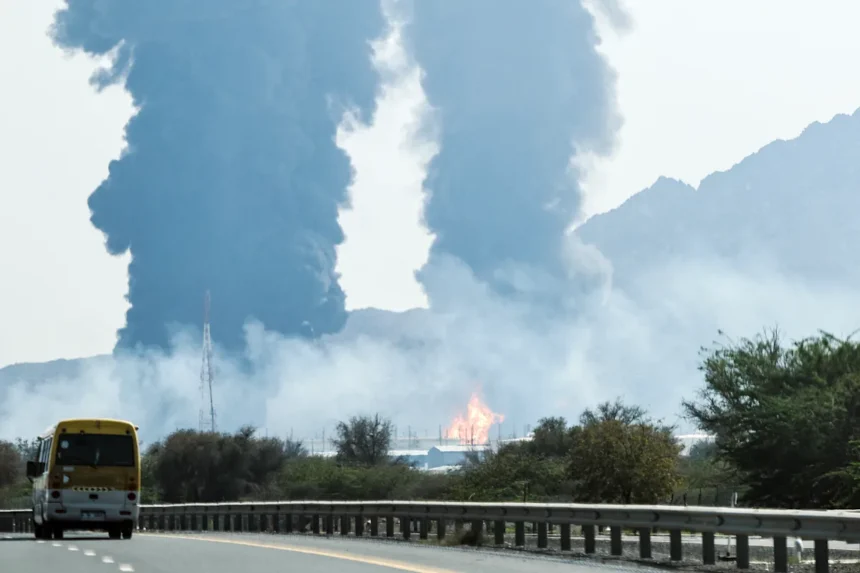
As the war in Iran stretches into its third week, the S&P 500 continues to hover less than 5% below its all-time high, reflecting a surprising resilience in equity markets. Despite this stability, analysts caution that elevated valuations and narrowing equity risk premiums could render stocks more susceptible to market fluctuations, particularly if the geopolitical conflict escalates into a broader macroeconomic crisis.
Goldman Sachs strategists highlighted in a recent client note that the current market conditions, characterized by a “priced-for-perfection” environment, raise concerns about potential vulnerabilities. They pointed out that prolonged high oil prices could exacerbate inflationary pressures, which might in turn weaken the bond market and lead to a reevaluation of equity values at the index level. The warning comes as recent labor market statistics suggest diminishing momentum, raising worries about the economy’s ability to withstand further shocks.
Historically, U.S. equities have demonstrated resilience in the face of geopolitical turmoil, with sell-offs driven by energy price spikes often proving to be short-lived. The strategists expressed optimism that a rapid resolution to the Iranian conflict could mitigate economic damage, reinforcing the notion that any adverse effects would likely be temporary.
However, they noted that equities are currently facing an increased risk of correction due to stretched valuations and marginally deteriorating macroeconomic conditions. Emerging pressures across various indicators, including growth, inflation, credit, and labor markets, augment these concerns. Despite this, Goldman Sachs emphasized that strong corporate fundamentals, including robust earnings and healthy balance sheets, lend support against fears of a sustained bear market. Historically, geopolitical crises have often provided opportunities for savvy investors rather than inflicting lasting harm on market dynamics.
In summary, while the current geopolitical tensions add complexity to the market landscape, the balance of robust fundamentals and historical resilience suggests that substantial long-term risks may be mitigated, even in the face of emerging challenges.