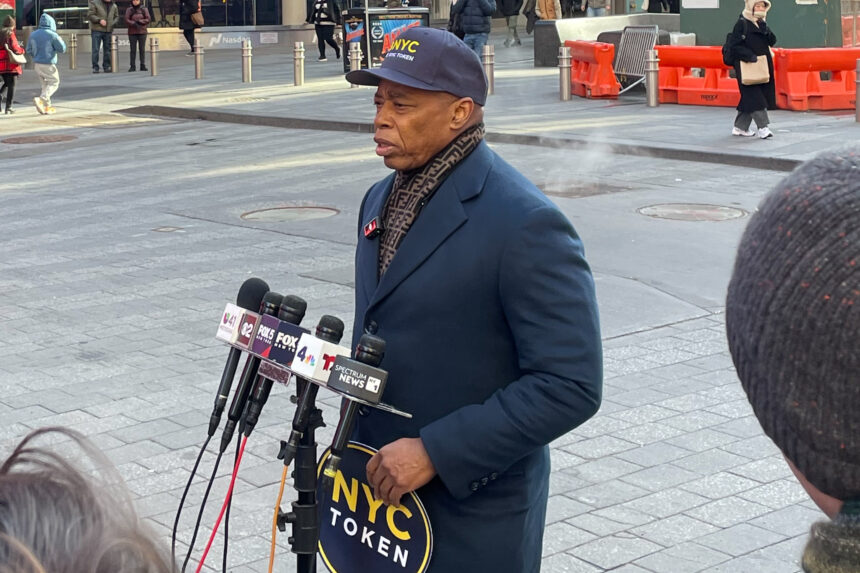
In a striking turn of events in the realm of cryptocurrency, former New York City Mayor Eric Adams faced significant backlash following the launch of his new digital coin, The NYC Token. Announced with great fanfare at a high-profile event in Times Square, the token was heralded by Adams as the “future of digital currency.” However, this optimistic projection quickly faltered as the token’s value crashed dramatically shortly after its debut.
Initially priced at 60 cents per share when it launched on Monday afternoon, The NYC Token experienced an immediate downturn, plummeting to just 10 cents by the following day. By Tuesday, its value had barely recovered, stabilizing around 13 cents. This sharp decline prompted crypto analysts and enthusiasts to accuse the token’s developers of engaging in a “rug pull,” a term used to describe the sudden withdrawal of assets by project creators, leading to substantial losses for early investors.
In a layer of drama surrounding the launch, Eddie Cullen, a self-identified tech entrepreneur, reached out to media sources claiming a prior connection to the concept. Cullen asserted that he had pitched the idea for a NYC-focused token to the Adams administration last summer and had even secured a trademark for the name “NYCToken.” This revelation raised eyebrows, prompting questions about the originality of Adams’ initiative.
As the news of the token’s crashing value circulated, it became evident that the identities and investment motives of the backers behind The NYC Token remained undisclosed. The uncertainty surrounding the financial implications of the token’s devaluation led to suspicions about the motivations of those involved.
Elissa Buchter, a spokesperson for The NYC Token, addressed the fears surrounding the token’s decline and the removal of liquidity. Buchter emphasized that the team behind the initiative had not profited from the situation and had not withdrawn funds from the project’s accounts. She elaborated that team members were bound by a 10% profit-sharing agreement and faced restrictions on token sales and transfers. Buchter framed the downturn as evidence of a strong public interest in combating antisemitism and “anti-Americanism,” aspirations that Adams intends to support using profits from the token sales.
Cullen, expressing his disappointment, reiterated that he had previously engaged with the Adams administration to discuss his own token’s methodologies. He mentioned that he found the announcement confusing, considering his prior interactions with city officials concerning similar concepts, and noted that his trademark for “NYCToken” was filed in July.
In response to Cullen’s claims, Todd Shapiro, a spokesperson for Adams, indicated that the former mayor would not comment on the matter, leaving questions surrounding the relationship between Adams’ project and Cullen’s prior proposal unanswered. As the situation unfolds, the digital currency landscape remains tense, with the future of The NYC Token in a precarious position and investors left to grapple with the fallout from its rocky launch.