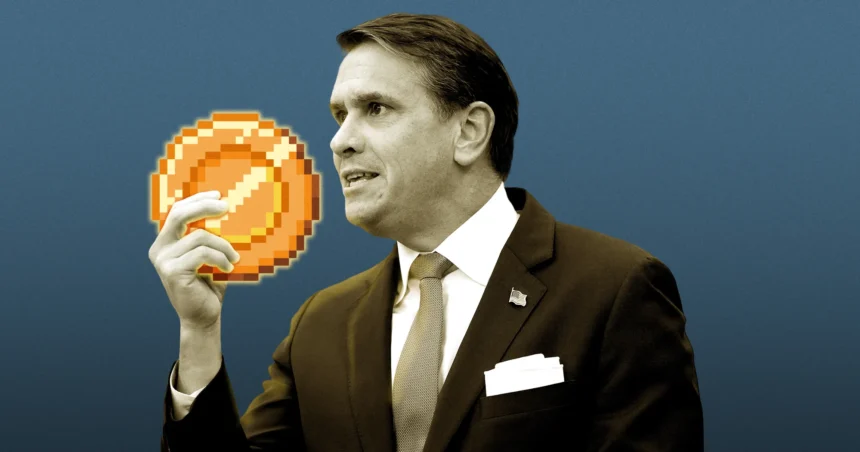
Before Todd Blanche could ascend to the role of the Justice Department’s second-highest official, he faced scrutiny over potential conflicts of interest related to his prior investments in cryptocurrency. As President Donald Trump’s personal attorney during a high-profile criminal trial in New York, Blanche held cryptocurrency investments valued between $159,000 and $485,000. To align with federal conflict of interest laws, he agreed to divest these assets within 90 days of his Senate confirmation in March.
However, within a month of taking office, Blanche issued a controversial memo that ceased investigations into cryptocurrency companies and financial firms initiated during President Joe Biden’s administration. He disbanded a dedicated enforcement team that had been focusing on crypto fraud and money laundering. Notably, Blanche indicated that the Justice Department would support Trump’s working group aimed at cementing the United States as a leader in digital currency.
Legal analysts and former ethics officials highlighted that Blanche’s actions could represent a clear violation of both the conflict of interest laws and his own ethics agreement. Virginia Canter, a former White House ethics lawyer, articulated concerns over the inherent conflict in making decisions that might benefit an industry in which he still held financial stakes.
When Blanche did eventually divest, he transferred his cryptocurrency holdings to his adult children and a grandchild—a tactic experts believe, while legal, undermines the intent of maintaining ethical integrity in government. Such actions exemplify the ethical dilemmas surfacing during an administration focused on loosening regulations surrounding digital currencies.
Since taking office, Trump has nominated a substantial number of political appointees with significant cryptocurrency investments, a marked contrast to Biden’s limited cohort of appointees with far less financial interest in the industry. Key figures among these appointees include Commerce Secretary Howard Lutnick, who previously led a major financial firm with vast investments in cryptocurrencies, and Paul Atkins, chair of the Securities and Exchange Commission, who holds millions in crypto-related assets.
Lutnick’s ethics agreement allowed him to transfer his shares in Cantor Fitzgerald to his children; however, he undertook several pro-crypto initiatives while this transfer was pending. Meanwhile, Atkins’s agency has notably reduced enforcement actions against crypto companies, raising further concerns about regulatory oversight.
The Trump administration has actively enacted policies relaxed regulation of digital currencies, signaling a shift from prior governmental stances. Critics have characterized this trend as an alarming departure from ethical standards set by previous administrations. Experts argue that relaxed ethical scrutiny enables the rapidly increasing influence of the cryptocurrency sector over regulatory bodies.
Former congressional staffer James Thurber condemned this trend, advocating for a return to stringent ethics safeguards akin to those established by previous administrations. He contrasted the current handling of conflicts with historical examples, such as President Jimmy Carter’s decision to place his peanut farm into a blind trust.
In light of Trump’s early promise to make the U.S. the “crypto capital of the world,” the administration’s ongoing appointments and policies signal a substantial pivot in how digital currencies are treated within the federal government. This trajectory has implications not only for regulatory practices but raises fundamental questions regarding the integrity of decision-making processes influenced by personal financial interests.
The fallout from Blanche’s actions and the broader crypto-favorable policies continue to echo, as industry advocates and critics alike scrutinize the growing intertwining of politics and cryptocurrency regulation.