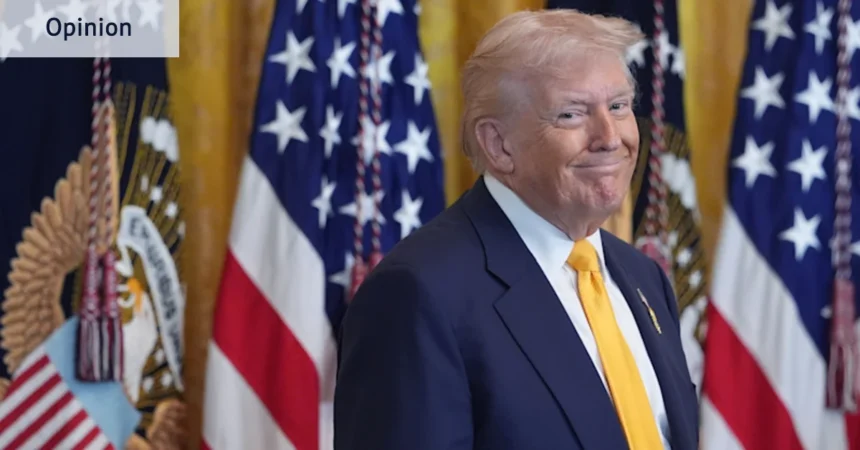
The recent decline in the value of the US dollar, coinciding with Donald Trump’s return to the presidency, has prompted the eurozone to reassess its international monetary strategies. Eurozone finance ministers convened in Brussels to explore ways to enhance the euro’s position as a global currency. They cited various geopolitical factors—including strategic competition, regional conflicts, and trade tensions—as catalysts for this reevaluation.
A significant concern discussed was the rapid increase in US government debt, which has raised alarms regarding long-term fiscal stability in America. A document prepared for the meeting emphasized that the EU operates within a complex geopolitical landscape, highlighting shifts in the international monetary and financial system. With the US dollar traditionally dominating global trade and finance, the current fragmentation raises questions about its status as a reliable currency.
The EU has long aspired to create a robust alternative to the dollar, echoing China’s ambitions for the renminbi. However, several challenges complicate this goal, including the diverse economic conditions of its 27 member states, the fragmentation of its debt markets, and the lack of a unified legal framework. Historically, the dollar’s dominance has allowed for potential weaponization, evidenced by the US actions post-Russia’s invasion of Ukraine, which forced many nations to reconsider their reliance on the dollar.
As the dollar’s value continues to decline—a decrease of about 11% against a basket of trading partners and a 13% fall against the euro—there is a growing impetus for the EU to diversify its reserves. The dollar’s long-standing dominance is waning, with increasing numbers of countries opting for transactions in their own currencies.
In a recent development, the European Central Bank launched a facility enabling other central banks to borrow euro liquidity during financial stress. ECB President Christine Lagarde sees this as a pivotal move to transition the euro from a regional currency to a global one, enhancing confidence in euro-denominated investments.
However, transforming the euro into a viable alternative to the dollar will require significant internal reforms within the EU. These include the removal of internal trade barriers, establishing a unified corporate law framework, and creating a deeper banking sector with eurobonds guaranteed by member states. The ECB is also expected to push forward with plans to introduce a digital euro.
The quest to reduce the dollar’s dominance will not be an instantaneous process but rather a long-term endeavor. Yet recent shifts in America’s global relationships and its role as a financial safe haven may present the EU with a unique opportunity to solidify its ambitions in international finance. If the EU can navigate the internal disagreements and challenges it faces, this moment might be crucial for enhancing the euro’s global standing.