European stocks experienced a positive trajectory on Thursday as investors closely monitored unfolding geopolitical developments in the Middle East. The pan-European Stoxx 600 index rose by 0.5% by 11:08 a.m. in London, recovering from previous losses. Significant movements were noted in various major markets: the UK’s FTSE 100 climbed 0.3%, Germany’s DAX gained 0.4%, and France’s CAC 40 also rose by 0.4%. Notably, Spain’s IBEX saw an increase of 1%, driven by the country’s ongoing tensions with the U.S. regarding military cooperation.
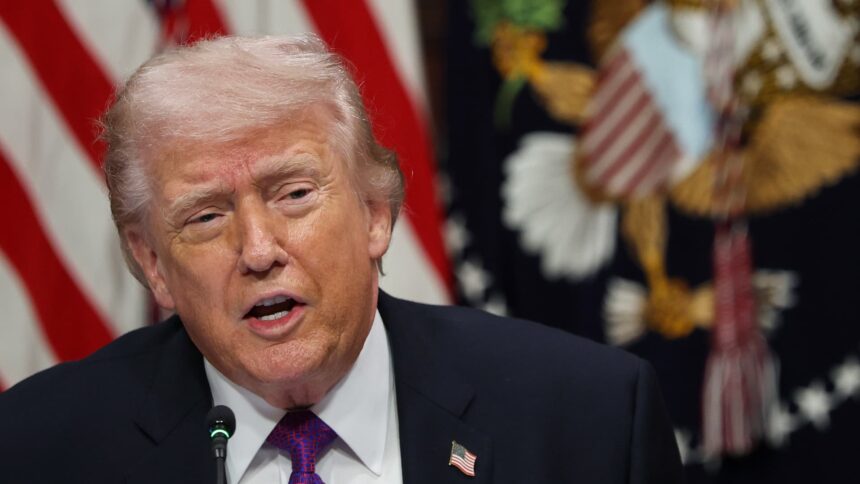
Tensions escalated when U.S. President Donald Trump criticized Spain for its reluctance to permit American forces to utilize its military bases for operations targeting Iran. “Spain has been terrible,” Trump remarked on Tuesday, announcing plans to sever trade ties with the country. In response, Spanish Prime Minister Pedro Sánchez labeled the Middle Eastern crisis a “disaster,” emphasizing the need for peaceful resolutions. Subsequently, the White House indicated that Spain would collaborate with the U.S. militarily; however, this claim was firmly rejected by Madrid.
On the corporate front, German tank manufacturer Renk reported a substantial revenue increase of 19.8%, amounting to 1.37 billion euros (approximately $1.6 billion) for the 2025 fiscal year, attributed largely to growth in its defense sector. The company disclosed new order intakes of 1.57 billion euros, contributing to a total order backlog of 6.7 billion euros, an upswing from about 5 billion euros in 2024. Looking ahead, Renk anticipates revenues of 1.5 billion euros in 2026, despite continued geopolitical uncertainties, although its shares dipped around 3%.
International focus remains on the military operations involving the U.S. and Israel against Iran, where recent attacks have intensified. Israel’s Defense Minister has vocally committed to dismantling Iranian military capabilities, following the U.S. announcement of the destruction of 17 Iranian ships and approximately 2,000 targets associated with the Iranian regime.
Reports emerged from Iran suggesting that senior clerics are considering Mojtaba Khamenei, the son of the late Supreme Leader Ayatollah Ali Khamenei, as a potential successor. As the situation develops, analysts convey uncertainty around the long-term objectives of the U.S. and Israel’s “Operation Epic Fury,” with experts warning of the potential for complications if the Iranian regime demonstrates unexpected resilience.
Amid these geopolitical tensions, oil prices saw an upward trend, with Brent crude gaining approximately 1.8% to reach $82.79 per barrel, while West Texas Intermediate crude rose by 2% to settle at $76.19 per barrel. Dan Coatsworth, head of markets at AJ Bell, remarked on the rapidly evolving Middle East scenario, noting the challenges for investors in predicting whether the current situation will lead to a prolonged energy crisis or merely a transient disruption.
The uncertainty also permeated the bond markets, leading to a rise in global bond yields. France and Italy’s 10-year government bond yields increased by 6 basis points, while German and British yields saw a slightly lower rise of around 5 basis points, reflecting the ongoing ramifications of geopolitical tensions on financial markets.