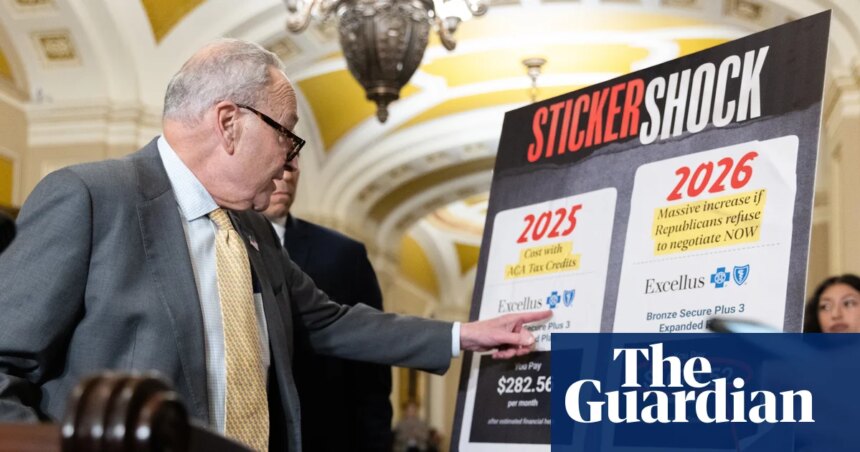
With the expiration of subsidies for Affordable Care Act (ACA) health insurance looming, experts warn that many Americans may be forced to reevaluate their health insurance strategies, opting for plans with lower monthly premiums but higher deductibles or forgoing coverage altogether. Such choices could have severe consequences for the healthcare landscape as a whole.
A recent analysis by the Kaiser Family Foundation (KFF) indicates that the average annual premium costs for ACA enrollees are expected to skyrocket from approximately $888 this year to an alarming $1,904 by 2026. This price increase is projected to trigger significant economic effects, particularly for rural hospitals and individuals with employer-sponsored health insurance.
Emma Wager, a senior policy analyst for KFF’s ACA program, highlighted that a substantial number of individuals dropping their marketplace coverage could leave many uninsured, which would reverberate throughout the healthcare sector, affecting everyone—not just those lacking coverage.
During the COVID-19 pandemic in 2021, Congress acted to extend eligibility for ACA health insurance subsidies and increased financial assistance for eligible individuals. This legislation resulted in a notable rise in enrollment figures in the healthcare marketplace. However, with the expiration of premium tax credits set at the end of the year, efforts to extend these credits, led by Democratic lawmakers and a small faction of Republicans, faced significant legislative hurdles. A move to preserve the credits recently failed to garner the necessary 60 votes in the Senate.
Additionally, a Republican proposal aimed at expanding health savings accounts and offering payments of up to $1,500 for the purchase of basic health insurance plans also failed to advance. Despite this uncertainty, preliminary enrollment statistics indicate that individuals have continued to sign up for ACA coverage. As of December 5, the Centers for Medicare & Medicaid Services reported that 5.7 million people had enrolled during the open enrollment period, a slight increase from the same time the previous year.
Natasha Murphy, director of health policy at the Center for American Progress, believes that the full repercussions of the subsidies expiring may not reveal themselves until the end of the open enrollment period on January 15. She noted that observing who follows through with paying their first premium will be pivotal in understanding the post-subsidy landscape.
KFF’s recent survey indicates a troubling trend: if subsidies do expire, roughly one-third of the 24 million adults purchasing coverage via the ACA marketplace stated they are likely to choose lower-premium plans, which often come with higher out-of-pocket costs and deductibles. About a quarter of current enrollees expressed they might be “very likely” to go without any insurance.
Gerard Anderson, a health policy and management professor at Johns Hopkins University, warned that escalating premiums could lead to a scenario where healthier individuals opt out of coverage—creating a “death spiral.” As only sicker individuals remain in the program, the sustainability of the insurance model could be jeopardized.
Those forced into high-deductible plans or left uninsured may struggle to handle medical expenses in times of illness or injury. Wager pointed out that hospitals would face increased pressure as they care for patients unable to pay for services, which could adversely impact rural hospitals with tight financial margins. Such institutions may ultimately consider raising prices, affecting even those with employer-sponsored insurance.
Furthermore, if subsidies lapse, individuals in rural regions could experience even steeper premium hikes compared to their urban counterparts, as indicated by the Century Foundation, a progressive think tank. This presents a paradox, as many affected individuals rely heavily on ACA coverage yet live in districts represented by Republicans, many of whom opposed extending tax credits. Wager noted that farmers and ranchers are particularly dependent on the ACA, adding to the concern that constituents facing substantial premium increases are those represented by lawmakers who voted against these financial supports.