The intricate history of Chrysler reveals a landscape marked by joint ventures, bailouts, acquisitions, and complex mergers, resulting in its current status as a part of a large conglomerate with an unusual name. This tumultuous journey has given rise to a variety of vehicles that bear the Chrysler badge, yet share little with the company’s present lineup.
In this analysis, two particular vehicles stand out as unique remnants of Chrysler’s rich legacy. Among a recent selection of classic cars, these two examples are appealing not just for their condition but also for their intriguing backstories.
The first vehicle is a vibrant Fiat 500, which took the spotlight in a recent competition. It was closely followed by the Plymouth Valiant wagon, a striking Chevrolet S-10 Blazer, and a Chrysler New Yorker, bringing a diverse mix of automotive history to the forefront. Each vehicle offers its own charm, yet the Fiat showcases an element of fun, while the Valiant wagon may evoke feelings of nostalgia. The Blazer serves as a potential conversation starter, though it raises questions about practicality. In contrast, the Chrysler New Yorker seems fit for practical use, perhaps as a first car for a young driver or a reliable winter vehicle.
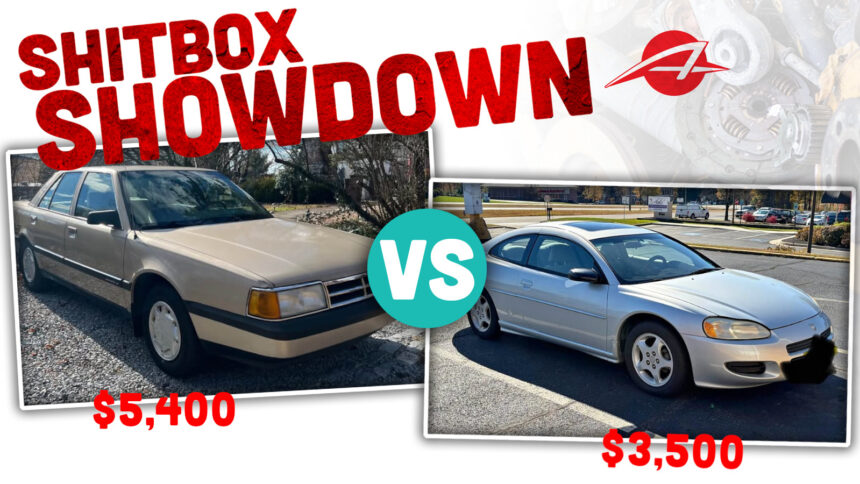
Diving deeper into Chrysler’s history, the post-bankruptcy era of the late 1970s saw a resurgence that led to the acquisition of AMC in 1987, primarily for its Jeep brand, yet bringing along other model lineups, one being the Premier sedan that AMC was developing with Renault. Chrysler capitalized on these leftover models by creating a new division called Eagle. One notable result is a refined version of the Premier, rebranded as the Dodge Monaco, featuring a Dodge grille and embodying a fascinating blend of Chrysler’s evolution.
The revived Dodge Monaco boasts a 3.0-liter OHC V6 engine paired with a four-speed automatic transmission. This particular model, with just 24,000 miles, resides in Emmaus, PA, and runs smoothly, despite needing minor maintenance such as a new serpentine belt. The interior remains pristine, reflecting its low mileage, although it deviates from typical safety standards, lacking a driver’s side airbag in favor of automatic shoulder harnesses. The exterior, attributed to designer Giorgietto Giugiaro, is well-kept yet shows signs of its past with a few dents.
A second vehicle of interest is a Dodge Stratus coupe located in Mechanicsville, VA. This car, carrying a 2.4-liter inline four-cylinder engine and originating from a collaborative effort between Chrysler and Mitsubishi, showcases an intriguing blend of design heritage. The Stratus coupe, built at Diamond-Star Motors, was produced alongside its sedan counterpart, although they feature different engines.
This particular Stratus coupe, also in solid condition, has approximately 72,000 miles, with a history of careful ownership. Despite some cosmetic issues, such as a cracked dashboard, it has been painted and remains operational. However, the non-functioning sunroof might deter potential buyers. Both vehicles exemplify a type of automotive history that might be overlooked in discussions about more mainstream options.
These two models—each a product of intricate industry connections—represent more than just cars; they are artifacts of a bygone era, intriguing for their unique stories and peculiarities. Whether it’s the charming Dodge Monaco or the sporty Stratus coupe, both vehicles hold a place in the diverse tapestry of Chrysler’s legacy, providing a glimpse into the brand’s unpredictable journey through the automotive landscape.