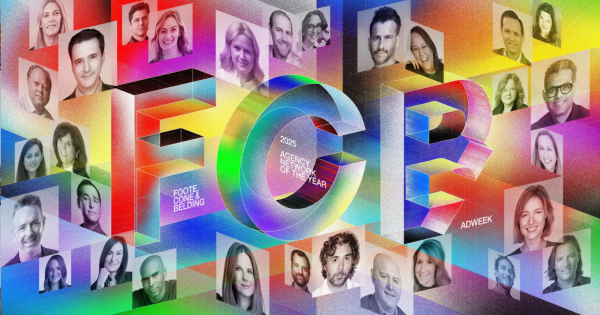
In a year marked by monumental achievements and significant transitions, FCB stands at a bittersweet crossroads. Following Omnicom’s acquisition of IPG in November—resulting in FCB being folded into BBDO—the agency’s storied 151-year legacy is coming to a close, just as it celebrates notable accolades. FCB’s leadership focused intently on client relationships, which proved vital during what would ultimately be the agency’s final chapter.
Meredith Kelly, global head of marketing at Škoda Auto, emphasized the importance of this commitment, stating, “Sometimes you pitch, you get to see the superstars, and then you never get to work with them again. They have been my team throughout.” This hands-on approach has both strengthened client trust and fostered lasting partnerships amidst uncertainty, especially as Omnicom announced plans to eliminate approximately 4,000 jobs, leaving many clients concerned about the stability of their teams.
Despite these challenges, FCB has consistently displayed resilience, as evidenced by the experience of Tyler Turnbull, who recently transitioned to CEO of McCann Worldgroup after leading FCB. The agency faced setbacks, including losing a significant account with Pfizer, but Turnbull reflected, “We all go in cycles. The true test of the management team is how you manage the down cycle.”
The momentum of FCB’s operations culminated in recognition as ADWEEK’s 2025 Agency Network of the Year. Collaborative efforts across its 120+ offices facilitated impressive outcomes. Since initiating a strategy in 2024 to promote cross-team pitches, FCB saw a 60% success rate in winning new business, resulting in the addition of 75 brands and an increase in revenue of $45 million. Global chief creative officer Andrés Ordóñez noted, “The bigger ideas don’t have a specific geography; they just have really good talent.”
FCB’s innovative Creative Rumble initiative fostered unprecedented collaboration across teams, enabling rapid ideation to address client needs. The approach was particularly fruitful for Kimberly-Clark, drawing talent from 13 offices and generating an impressive array of ideas. Corsi remarked on the value of this creativity, stating, “When people are pushing for crazy ideas … there are some moments where I’ve said, ‘I feel uncomfortable, but I want to sleep on it.’ Those are magic moments.”
Patience and tenacity defined FCB’s creative journey this year. Projects like “Caption with Intention” took six years to develop, while the partnership with AB InBev was built over seven years, leading to breakthrough campaigns that resonated widely. Additionally, FCB enhanced its creative processes by establishing a global AI Council aimed at equipping staff with necessary skills, cementing its leadership in AI utilization.
As FCB nears the end of its operations, industry insiders express hope that the innovations and collaborative ethos cultivated during its legacy will endure in its new framework. The highlights of this year include major wins with clients such as Kimberly-Clark and Blue Cross Blue Shield, along with a net revenue growth of 5% year-over-year, even after the exit of Pfizer.
Key achievements for the agency during this period included its high-profile projects—like “Caption with Intention,” which garnered international accolades and recognition for its groundbreaking approach to accessibility, and Budweiser’s “First Delivery,” a narrative-driven ad celebrated during the Super Bowl.
Looking ahead, many are pondering the future of the creative spirit that once defined FCB, as it transitions into the next phase under BBDO’s management. With a workforce characterized by diversity—54% female and 46% male globally—FCB’s legacy of inclusion is another element that leadership hopes will continue to thrive in its new chapter.
As the agency concludes this remarkable era, its operational strategies and creative philosophies may well serve as a foundation for future successes within the larger Omnicom ecosystem.