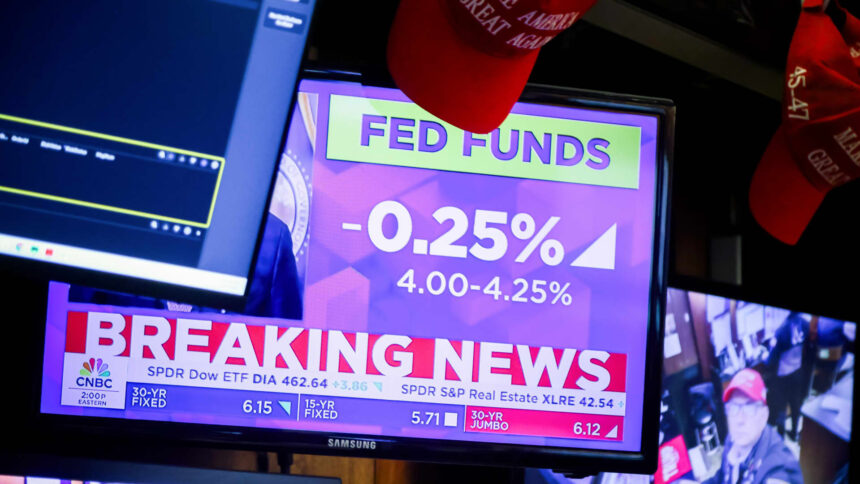
The recent Federal Reserve interest rate cut has prompted significant shifts across the Treasury yield curve, raising concerns among investors about the implications for various consumer loans, such as mortgages, home equity loans, credit cards, and even bank deposits. As the Fed grapples with its dual mandates of ensuring price stability and maximizing employment, it finds itself in a challenging position. Current market dynamics suggest a slowdown in the labor market is a more pressing concern for the Fed than the renewed rise in inflation.
The Fed’s decision to reduce rates by 25 basis points seems to reflect a prioritization of labor market stability. However, the bond market is reacting skeptically, causing longer-term Treasury yields to increase. For instance, the yield on a 10-year Treasury note currently hovers around 4.2%, locking in returns that must be weighed against potential future inflation. This situation demands a careful consideration of real returns—yield minus inflation—over the bonds’ maturity periods.
While acknowledging the Fed’s rationale for rate cuts, market analysts point out that if inflation were to rise due to factors like tariffs, such pressures may be transient compared to potential long-term labor market disruptions. With inflation still above the Fed’s target of 2%, cuts to policy rates may signal instability in longer-term bonds, prompting traders to sell off those securities, consequently pushing yields higher.
For investors, understanding the yield curve’s behavior is only the first step. They must also contemplate how to position their portfolios in light of these developments. Presently, it appears that inflation continues to exert upward pressure, the Fed is actively cutting rates, and trade negotiations remain unresolved, which collectively supports the notion that yields will rise.
Historical patterns suggest that when the Fed eased rates last year, bond yields increased despite overall economic conditions. As such, there is growing speculation among analysts whether the current scenario will mirror past trends, leading some to consider repositioning investments in light of potentially changing market conditions.
Market analysts are also keeping a close eye on upcoming inflation data, especially the August personal consumption expenditures (PCE) price index, which is particularly significant for the Fed as it provides insights into underlying price pressures. Current forecasts point to a year-on-year increase in core PCE of around 2.9%. Additionally, the recent consumer price index (CPI) data indicated a core rate increase of 3.1%, which will be critical for confirming or challenging prevailing inflation narratives.
As the market navigates these complex dynamics, investors are urged to remain vigilant and reassess their holdings, particularly those associated with longer-term yields, to inform their strategies moving forward.