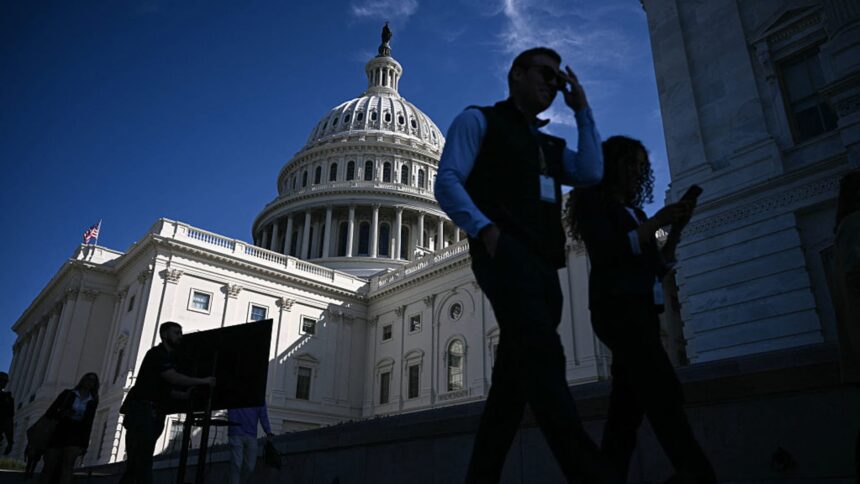
The federal government has officially shut down after lawmakers were unable to reach an agreement on a short-term funding measure before the deadline. This impasse has led to the suspension of all “nonessential” government functions, causing hundreds of thousands of federal employees to be furloughed or to work without pay. However, essential services, including air traffic control and the distribution of Social Security checks, will continue to operate.
The Congressional Budget Office anticipates that approximately 750,000 federal workers will be affected by the shutdown, which could cost the U.S. economy about $400 million for each day they are out of work. Historically, Congress has made provisions for retroactively paying workers who are furloughed or working without pay during such shutdowns.
While government shutdowns can cause significant disruptions for both government employees and the public, investors have often remained relatively unfazed by them. According to Sam Stovall, chief investment strategist at CFRA, history shows that these shutdowns tend to be more newsworthy than detrimental to financial markets. Since 1976, there have been 21 government shutdowns, with a median duration of just four days since 1984. Once funding is restored, the financial markets usually rebound swiftly; the S&P 500 index has risen following 71% of shutdowns since 1976 and 93% of those since 1984. In fact, during the longest recorded shutdown from December 2018 to January 2019, the S&P gained 10.3%.
Despite the typical resilience of markets, the current shutdown raises some short-term concerns that could impact both the markets and the economy. Analysts have expressed apprehension about the timing of the shutdown and its potential effects on economic data releases. If the stalemate persists past Friday, key data, such as September payroll figures from the Department of Labor, may be delayed. A prolonged shutdown could also push back the collection of October payroll data, complicating the Federal Reserve’s monitoring of economic indicators. This is especially pressing as the Fed is scheduled to meet later this month to discuss monetary policy.
Mark Zandi, chief economist at Moody’s, noted that in the absence of crucial data, the Fed might feel “kind of flying blind.” Nonetheless, analysts from UBS believe the Fed will still have sufficient information from private data and internal surveys to inform its anticipated interest rate decisions.
In addition to data concerns, there is worry regarding the broader economic impact. A full government shutdown could diminish GDP growth by an estimated 0.1 percentage points for each week it remains in effect. While this drag could be mitigated in subsequent quarters if federal employees receive back pay and spending normalizes, there are fears that permanent cuts to government programs could arise during the shutdown process.
President Trump has suggested that certain cuts to government programs could become permanent. He stated that actions taken during a shutdown could lead to irreversible negative consequences on government services. Vice President JD Vance echoed this sentiment, indicating that some layoffs might be necessary to ensure essential services continue.
Despite concerns about the economic repercussions, experts believe that any permanent job losses would likely face significant legal obstacles and would affect only a small fraction of the federal workforce. As the impasse continues, the nation watches closely, awaiting developments that could shape the economic landscape in the weeks to come.