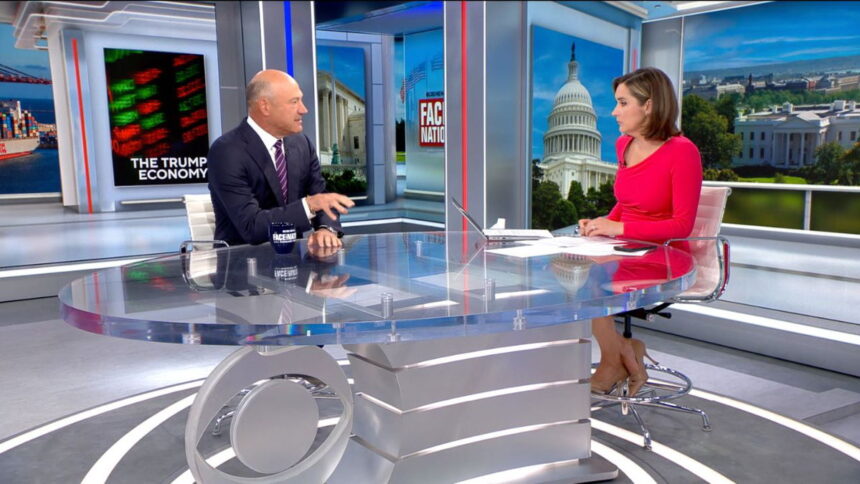
In a recent interview on Face the Nation, Gary Cohn, Vice Chairman of IBM, provided insights into the Federal Reserve’s decision to lower interest rates by a quarter percentage point. This move marks the beginning of a potential easing cycle, with Cohn highlighting important projections regarding future interest rate cuts.
Cohn explained that the Fed’s latest announcement signals the initiation of interest rate reductions, specifying a range now set between four and four and a quarter percent. According to Cohn, the forecasts indicated by the 17 members of the Federal Reserve’s Board of Governors suggest that rates could be cut two more times within the current year. This divided outlook, however, reveals differing opinions within the committee—while seven members are hesitant to endorse any further cuts, ten support a reduction, with one advocating for more than two cuts. If these projections materialize, the federal funds rate could settle at approximately 3.6% by the end of the year.
Cohn emphasized the Fed’s commitment to independence in its policymaking, asserting that the recent data considered were reflective of current economic conditions. During the discussion, he addressed the labor market, which Fed Chair Jerome Powell has described as “really cooling off.” Cohn noted that there appears to be a disconnect with the Trump administration’s perception of job growth, as Treasury Secretary Scott Bessent has voiced differing views.
Cohn elaborated on the Fed’s dual mandate: achieving stable prices with an inflation target of 2% and ensuring full employment. He pointed out that although inflation remains a concern, the labor market has shown signs of decline. Recent data revealed a notable decrease in job creation, falling from over 100,000 jobs per month to under 50,000 in recent months. This shift might be temporary; however, it has raised flags about employment trends.
Moreover, Cohn discussed how companies are responding to increased input costs, influenced by factors such as tariffs. He noted that many businesses facing financial strain are opting to manage expenses by reducing their workforce. This marks a significant shift from the earlier trend during the COVID-19 pandemic when businesses were keen on retaining labor to ensure a manageable workforce.
As the economic landscape evolves, Cohn asserts the evidence of a shrinking job force, attributed to natural retirements and shifting corporate strategies, is becoming increasingly apparent. The Federal Reserve’s awareness of these dynamics was reflected in its recent policy decisions, underscoring the connection between labor market trends and broader monetary policy.
Cohn’s insights provide a valuable perspective on the current state of the economy, illustrating the complexities involved in balancing interest rates, inflation, and employment. To view the full interview and hear more of Cohn’s analysis, interested viewers can access the broadcast online.