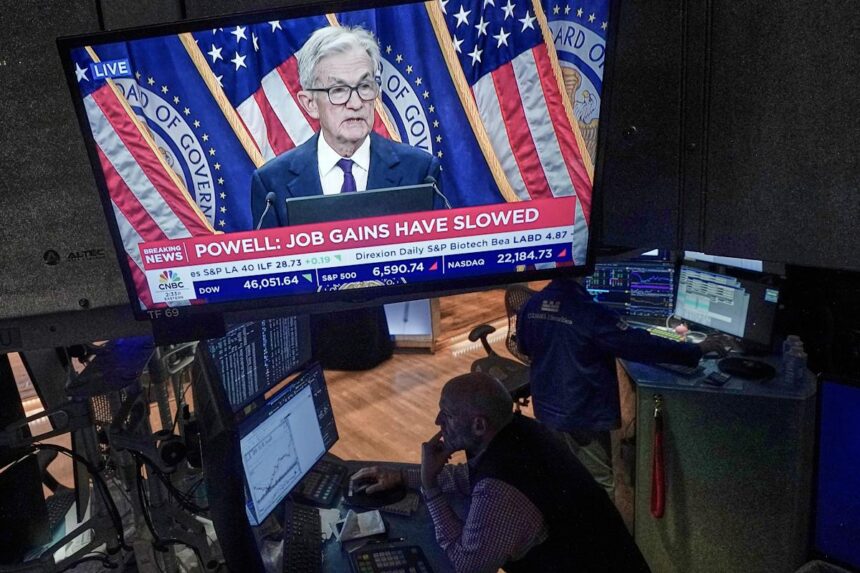
Stocks continue to soar to new record highs, buoyed by the Federal Reserve’s recent decision to cut interest rates by a quarter point. This move, announced on Wednesday, comes with indications from Fed Chair Jerome Powell that two additional rate reductions may be on the horizon before the end of the year. The central bank described this measure as a “risk-management” strategy aimed at alleviating pressures from a softening labor market, further solidifying Wall Street’s belief that the current rally has more room to grow.
Keith Lerner, chief market strategist at Truist, highlighted that historically, cuts in interest rates made when the S&P 500 is within 3% of its record highs have often led to subsequent gains, citing a 90% success rate over the past several decades. Lerner emphasized that while Fed policy is just one element influencing the market, equity performance has generally remained robust during rate cuts that occur outside of recession periods, especially when corporate earnings stay strong.
Reflecting this optimism, strategists from major financial institutions such as Wells Fargo, Barclays, and Deutsche Bank have recently raised their S&P 500 targets. They attribute this bullish sentiment to resilient earnings reports, a robust artificial intelligence investment cycle, and a more accommodating stance from the Federal Reserve.
Additionally, Bank of America’s latest fund manager survey revealed that equity allocations have reached seven-month highs, further emphasizing market optimism among investors. However, not all market analysts share this upbeat outlook. Some caution that the near-term landscape is becoming increasingly challenging, with potential volatility ahead.
Scott Chronert from Citi indicated that the S&P 500 index has already met his year-end target of 6,600, suggesting that equities are “fairly valued.” He pointed to the upcoming Q3 earnings season as a pivotal moment that could determine the market’s direction moving forward.
Similarly, Mark Newton from Fundstrat raised concerns about the near-term risk-reward for the S&P 500, labeling it “unappealing.” He noted a decline in market breadth over the past two weeks and suggested that the Nasdaq 100 might face a short-term sell-off following signs of market “exhaustion.”
Julian Emanuel of Evercore ISI echoed these sentiments, asserting that volatility in the tech sector “has nowhere to go but up” in the near future, though he remains optimistic about a longer-term AI-driven bull market with a potential target of 7,750 by 2026.
In the current climate, investors find themselves navigating what JPMorgan has termed a “jobless expansion.” The prevailing assumption is that a weaker job market will prompt the Federal Reserve to continue its easing policies. Lower interest rates are expected to support stock valuations, while slower wage growth may bolster corporate profit margins. Goldman Sachs’ David Kostin captured this sentiment, stating, “A cooling labor market is a tailwind to corporate profits, all else equal.”