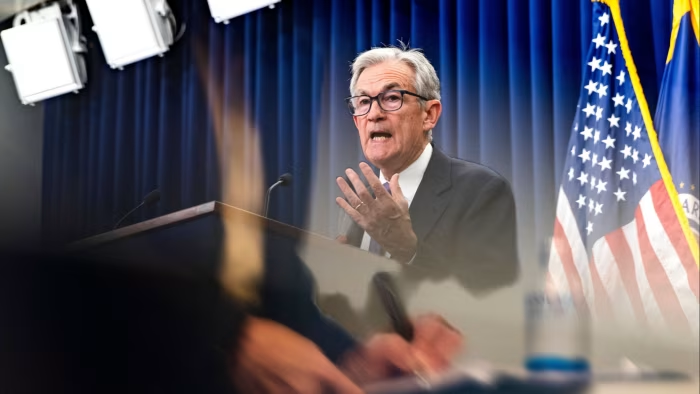
In recent events impacting the financial markets, the Federal Reserve took a significant step by announcing a 25-basis point interest rate cut, indicating that the process of reducing its balance sheet will conclude this year. However, the market reacted visibly to comments by Fed Chair Jay Powell, particularly concerning the anticipated December rate cut, which he described as “far from” guaranteed due to “strongly differing” opinions within the committee.
This uncertainty resonated through the markets, leading bond yields to increase and causing an initial upswing in stock performance to falter. The Federal Reserve is currently navigating operations under a government shutdown, which limits access to essential economic data. Powell alluded to this by comparing the situation to “driving in the fog,” suggesting a cautious approach moving forward, particularly regarding potential future rate cuts.
Amidst discussions surrounding job stability and inflation, Powell highlighted that the relationship between employment figures and inflation remains complex. He noted that while the job market is showing gradual signs of cooling, this is primarily due to supply issues rather than a dip in demand. Factors such as declining labor force participation and reduced immigration were cited as critical in this dynamic.
On the inflation front, Powell maintained that core inflation is nearing the Fed’s target of 2 percent, attributing some fluctuations in goods prices to tariffs. He argued that the current inflation rate, excluding the impact of tariffs, hovers around 2.3 to 2.4 percent, indicating a relatively stable environment. Yet, some financial analysts express concern that Powell’s optimism concerning services inflation may be overly reassuring. Current data reveals that services inflation, excluding energy and housing, is maintaining a year-over-year rate of 3.2 percent, with no apparent downward trend.
The conversation about financial conditions remains pertinent, particularly with asset prices at historically high levels. A resurgence of inflation could compel the Fed to increase rates, potentially triggering a market correction serious enough to precipitate a recession. When pressed on the implications of high asset prices and the potential risks posed by the exuberance in AI investments, Powell acknowledged the stability of the banking system and ruled out immediate risks from various financial factors.
In broader market news, technology companies released earnings reports that reflected varying investor responses. Meta Platforms saw its shares fall by 8 percent following a warning of escalating spending in the upcoming year. Conversely, Alphabet managed to post better-than-expected earnings, leading to a rise in its stock value. As anticipation builds for results from industry giants Amazon and Apple in the coming days, analysts continue to evaluate the viability of tech investments amid ongoing economic adjustments.
For those seeking more insights, the FT’s Unhedged newsletter offers a deeper dive into these developments, along with podcast discussions for further analysis of the current financial landscape.