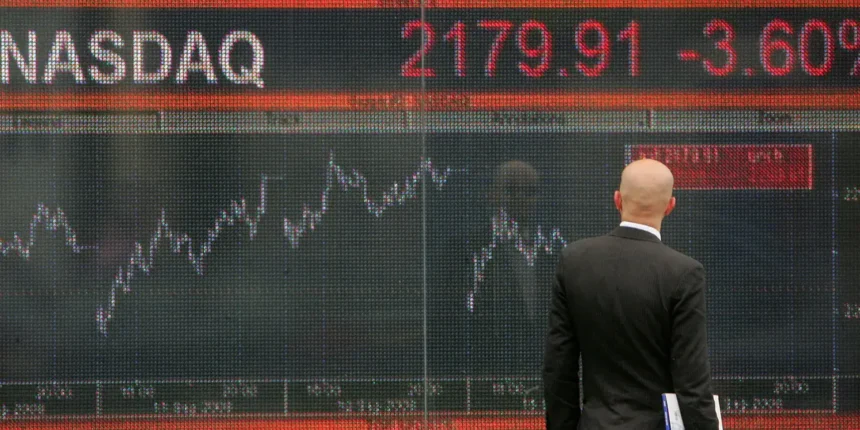
Risks of a financial crisis are intensifying, with potential ramifications that could surpass those of the Great Recession, as highlighted by Richard Bookstaber, a veteran finance expert renowned for accurately predicting the 2008 economic downturn. In a recent op-ed, Bookstaber outlined a worrying landscape marked by interconnected stressors afflicting the financial system, which he described as a return to a “period of risk” reminiscent of past crises.
Bookstaber, who has an extensive background in risk management at institutions such as Morgan Stanley and the U.S. Treasury, noted that the current market climate echoes the events leading to the 2008 crisis. He emphasized that he has transitioned from being optimistic that younger colleagues would not witness a similar economic collapse to harboring concerns that the next crisis could be more severe.
Central to his analysis are four critical stressors. First, there is palpable stress in the private credit market. Recently, asset managers including Blue Owl, BlackRock, Blackstone, and Morgan Stanley implemented limits on redemptions for certain funds, igniting fears of liquidity issues among investors. Bookstaber pointed out that many companies have increasingly depended on institutional lenders since the last financial crisis, leading to a scenario where loans remain illiquid and their actual value is uncertain. Notable investors, such as Mohamed El-Erian, view these redemption freezes as a “canary-in-the-coalmine” moment that could foreshadow broader instability.
Second, concerns about artificial intelligence (AI) have shifted from excitement to trepidation as fears grow that AI technology may disrupt major software and tech firms. The private credit market’s exposure to AI infrastructure compounds these worries, as investor withdrawals could trigger significant market withdrawals akin to those experienced before the 2008 collapse.
A third point Bookstaber raised is the concentration of investment in AI among major tech companies, including Amazon, Alphabet, Microsoft, and Meta. Collectively, these firms plan to invest approximately $600 billion in AI by 2026. The concentration of wealth and reliance within a few companies, such as Nvidia constituting about 7% of the S&P 500, creates vulnerability. A shock to any of these firms could reverberate throughout the entire market, affecting a wide swath of investors, retirees, and pensioners.
Lastly, geopolitical tensions exacerbate the physical requirements of AI development. Bookstaber noted that the booming demand for energy and advanced computing chips for AI applications has created significant supply-chain bottlenecks. The ongoing conflict in Iran, which has led to increased oil prices, alongside the critical reliance on Taiwan for chip production, raises the stakes for the tech sector. Any disruption in these areas could dramatically escalate costs for companies already heavily invested in AI, putting additional strain on both private credit and the broader stock market.
In summary, Bookstaber’s insights paint a stark picture of a financial landscape fraught with risks, where various shocks could propagate through interconnected systems in unpredictable ways. As the situation evolves, the potential ramifications for the global economy remain significant, prompting calls for increased vigilance among investors and policymakers alike.