Ford, the automotive giant with over a century of history, is navigating a turbulent transition into the electric vehicle (EV) market. Following a staggering $19.5 billion loss on EV investments in 2025, the company has opted to retreat from the F-150 Lightning project, a vehicle once touted as a revolutionary entry into the EV landscape. The firm is now pivoting towards hybrids, extended-range EVs, and traditional internal combustion engine vehicles, all while maintaining the vision that EVs represent the future of transportation.
This renewed focus seeks to prioritize affordability and unique design, avoiding oversized models with no feasible path to profitability, as stated by Andrew Frick, president of Ford Model e and Ford Blue. The company’s ambition is to create low-cost EVs that not only capture consumer interest but also ensure profit margins. To meet this challenge, Ford’s Silicon Valley-based skunkworks lab, led by Alan Clarke—a former Tesla executive—has begun unveiling its innovative efforts.
In a recent briefing, Clarke provided insights into Ford’s Universal EV Platform (UEV), which aims to serve as the foundation for a new range of budget-friendly EVs. The first model is set to be a $30,000 midsize truck expected to launch in 2027. This ambitious endeavor is supported by a dedicated team of around 500 engineers who are focused on two core principles: efficiency and affordability. The goal is to shed weight, improve aerodynamics, and innovate within existing constraints to boost both performance and cost-effectiveness.
Clarke emphasized that overcoming battery costs is critical, as they typically account for about 40% of an EV’s total cost. Rather than waiting for the breakthrough technology of solid-state batteries, Ford is concentrating on maximizing the efficiency of smaller battery packs through a system known as “bounties.” This new approach assigns numeric values to efficiency metrics, enabling engineers to understand how their daily decisions impact the vehicle’s overall cost and performance.
For instance, relatively minor adjustments, like a one-millimeter reduction in roof height, can save $1.30 in battery expenses. By quantifying the benefits of different materials and design choices, Ford engineers can ensure that their micro-decisions contribute positively to the final product. They have also began reengineering fundamental components, such as the side mirror, integrating multiple functions within a single actuator to reduce weight and drag, translating into tangible improvements in range.
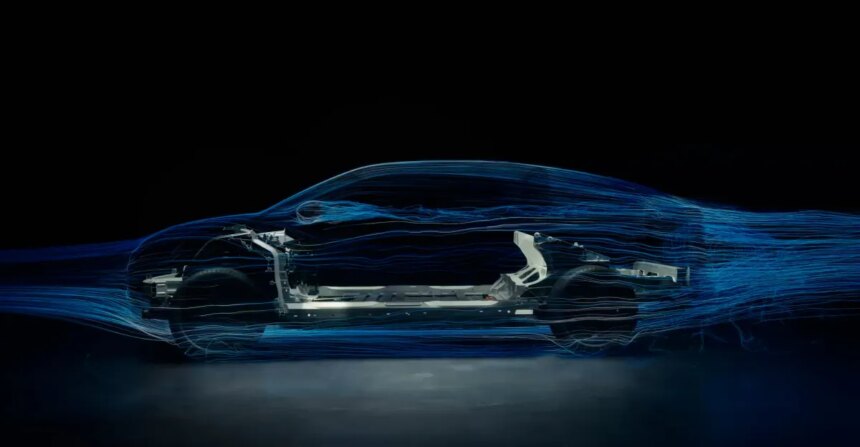
Ford’s engineers are working to counteract the challenges posed by physics, particularly aerodynamic drag, which becomes increasingly impactful at higher speeds. The innovative design strategies being implemented are derived from collaborations with specialists, including experts from Formula One, to streamline the UEV’s underbody and enhance airflow dynamics.
One significant advancement involves the use of large aluminum unicastings, which promises a weight reduction exceeding 27% relative to competitors. This lays the groundwork for a new midsize electric pickup that utilizes far fewer structural parts than previous models, allowing for increased efficiency.
To further drive down costs, Ford plans to utilize low-cost lithium iron phosphate (LFP) batteries, which avoid the expensive cobalt and nickel components typically found in conventional lithium-ion batteries. The integration of these batteries into the vehicle’s structural framework—a concept pioneered by Tesla—adds an additional layer of efficiency.
The UEV platform will also introduce a zonal wiring system intended to minimize complexity and reduce production costs, contrasting Ford’s previous domain-style architecture. Clarke argues that this approach distinguishes Ford from its competitors, as it allows for a more dynamic use of computational resources across the vehicle.
Despite these technical challenges, Ford is equally mindful of external factors slowing the growth of the EV market, such as policy changes and political headwinds. Still, Clarke has made clear that the company is not solely relying on government incentives, viewing them as added bonuses rather than essential components of its strategy.
Ford has teased design elements for its upcoming UEV truck, highlighting an aerodynamic profile with deliberate aesthetic choices to avoid the bland, overly common shapes often seen in EVs today. This blend of performance-focused engineering and appealing design aims to create vehicles that resonate with consumers.
As Ford accelerates its quest to reinvigorate the electric vehicle landscape, its UEV initiative stands to be a significant chapter in its storied history, marrying innovation with the rich legacy of a renowned automaker while aiming to meet the demands of a rapidly evolving market.