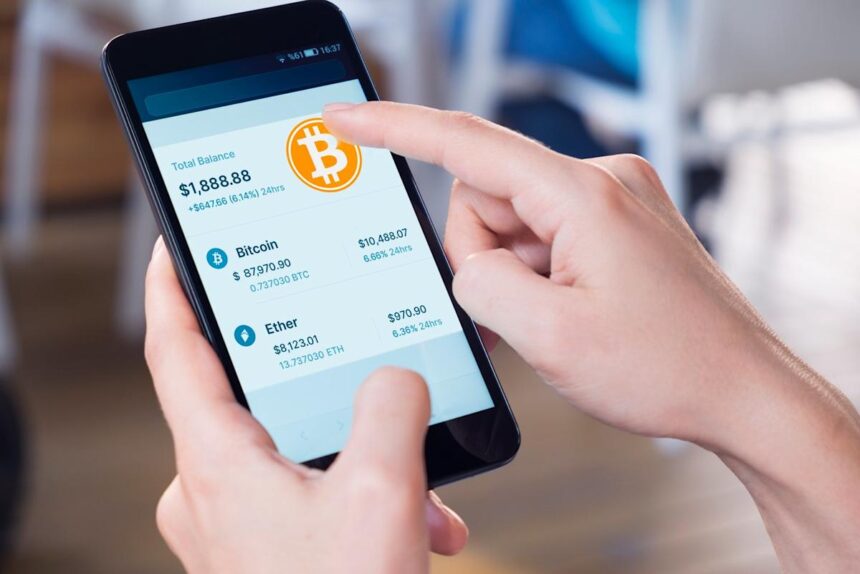
A growing number of cryptocurrency investors view exchange-traded funds (ETFs) as a significant step towards the mainstream acceptance of digital currencies. Notably, the iShares Bitcoin Trust has amassed $57 billion in Bitcoin assets, while the Fidelity Wise Origin Bitcoin Fund has gathered $13.5 billion. The recent launch of the Morgan Stanley Bitcoin Trust, which offers the lowest management fees in the Bitcoin ETF space, is also expected to increase value quickly, given its association with a well-known fund brand.
The year 2026 is shaping up to be pivotal for cryptocurrency, marking a period where digital assets are gaining substantial traction. However, the shift towards mainstream acceptance isn’t solely reliant on ETFs. Major financial institutions are exploring blockchain technology in ways that might go unnoticed by the average consumer.
For instance, Visa and Mastercard, two leading credit card companies, have been investing in digital asset integration for over a decade. Visa has already begun incorporating stablecoins into its payment processing frameworks. Recently, the company introduced Intelligent Commerce Connect, a tool that allows AI agents to engage in automated business dealings. This system leverages stablecoins and tokenized assets, enabling the secure conversion of sensitive information into anonymous tokens through Visa’s tokenization platform.
Meanwhile, Mastercard has initiated a crypto partner program enlisting collaborators such as Circle Internet, Kraken, and PayPal, among others. This advisory group is tasked with developing interoperable systems for money transfers to drive the next wave of financial innovation.
American Express is also stepping into the crypto space, utilizing Ethereum tokens in its newly launched travel app that stores user data on the Ethereum blockchain. The company has had experience with blockchain technology since 2017, when it began using Ripple’s XRP for a portion of its international transactions.
JPMorgan Chase is taking cautious steps in the crypto arena as well. The bank has tokenized money market funds and partnered with Coinbase to allow customers to buy cryptocurrencies through some of its investment accounts. However, CEO Jamie Dimon remains skeptical about the volatility of cryptocurrencies like Bitcoin, even while acknowledging the potential of stablecoins.
These developments signify that the integration of cryptocurrencies and blockchain technology into everyday financial operations is underway—albeit without the fanfare typically associated with technological revolutions. Notably, Visa is already processing stablecoin transactions across 50 countries, and Mastercard has collaborated with 100 partners to establish new payment infrastructures. American Express is utilizing blockchain for practical applications like memory storage.
In time, consumers may find themselves using these cryptocurrencies and blockchain solutions more frequently—potentially without even realizing it. The journey to mainstream adoption for digital currencies may not be headline-grabbing, but it is progressing steadily, marking a future where using cryptocurrencies could be as routine as swiping a credit card.
While some analysts caution against investing in traditional financial companies like Visa, citing other stocks with potentially higher returns, the wider implications of these companies’ integration of crypto solutions are worth noting. As the landscape of finance continues to evolve, the underlying structures leading to the mainstream acceptance of cryptocurrencies are being built quietly and effectively.