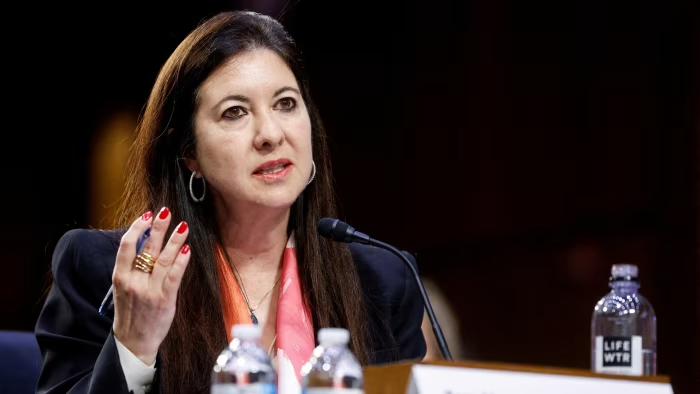
A significant investigation is set to unfold within the Federal Reserve regarding discrepancies discovered in the financial disclosures of Adriana Kugler, a former board member who resigned unexpectedly in August, several months prior to the conclusion of her term. This inquiry, initiated by the central bank’s internal ethics watchdog, follows the public release of a financial disclosures report indicating that certain transactions conducted by Kugler and her spouse may have contravened the established ethical guidelines of the Fed.
The ethics report, published recently, revealed that in 2024, Kugler or her husband engaged in buying and selling shares of various companies including Cava and Southwest Airlines, while also selling stocks in major corporations such as Apple, Palo Alto Networks, Fortinet, and Caterpillar. Notably, the Fed’s regulations specifically prohibit certain officials, including Kugler, as well as their spouses, from purchasing individual stocks. Additionally, transactions are restricted during a defined 10-day blackout period surrounding Federal Open Market Committee (FOMC) meetings, and officials are obligated to hold most equities for at least 45 days before selling them.
The recent disclosures highlighted potential violations of these rules, notably regarding shares in Cava and Southwest Airlines being purchased and sold within the 45-day holding requirement. There were also transactions conducted by Kugler’s spouse during designated blackout periods, raising further concerns about compliance. Additionally, the report noted Kugler’s involvement with Fidelity’s Select Semiconductor Fund, wherein she failed to adhere to the same rules regarding automatic dividend reinvestment.
Sean Croston, a deputy associate general counsel at the Federal Reserve, confirmed that the matter had been referred to the independent Office of Inspector General for investigation. In her disclosure, Kugler claimed that many transactions were conducted without her knowledge by her spouse, asserting that there was no intent to breach any rules or policies.
Kugler’s resignation came at a tumultuous time for the Fed, as it was under scrutiny from the Trump administration for maintaining higher interest rates despite calls for cuts. Initially expected to stay on the board until January, her unexpected exit enabled Trump to nominate Stephen Miran to fill her position.
Concerns regarding Kugler’s financial dealings emerged late last year and were subsequently reported to the Fed’s internal watchdog. Notably, prior to her resignation, she did not participate in a significant policy vote and sought a waiver for the FOMC trading policies to rectify earlier breaches, which was ultimately denied. This decision came after discussions with Fed chair Jay Powell. Kugler did not attend the FOMC meeting in July, citing personal reasons, just days before her resignation, which raised additional questions about the circumstances leading to her departure.
Kugler has not responded to inquiries regarding the ongoing investigation. The Federal Reserve has recently revised its ethics regulations following prior financial misconduct scandals involving high-level officials, including then-vice chair Richard Clarida and Federal Reserve Bank presidents Eric Rosengren and Robert Kaplan in 2021.