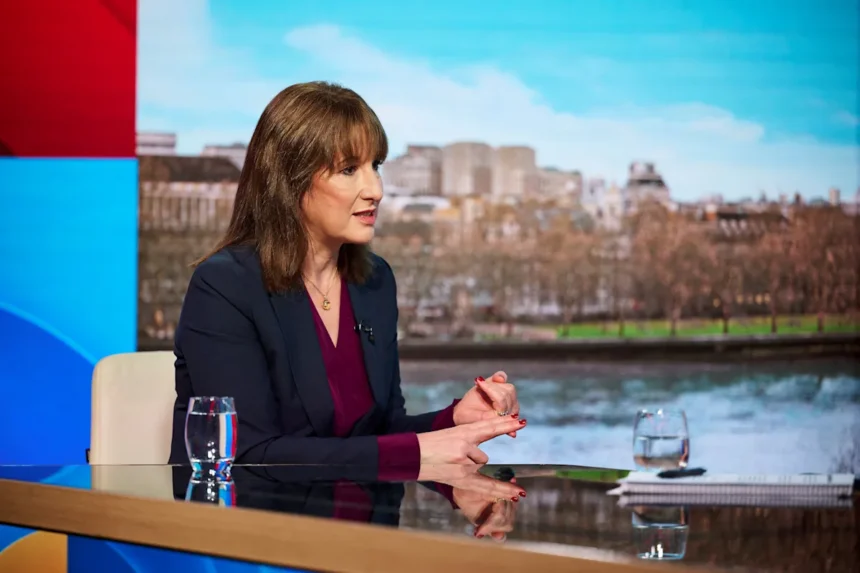
As December begins, the FTSE 100 and European stock indices are experiencing a downturn, with traders exhibiting a broadly risk-averse sentiment. The chancellor, Rachel Reeves, finds herself in a contentious position as she defends last week’s budget and her prior remarks regarding the state of public finances. During this period, major markets, including Japan’s Nikkei and US stock futures, are also trending downward, alongside significant declines in prominent cryptocurrencies such as Bitcoin and Ethereum.
Reeves is facing criticism for allegedly misrepresenting the conditions of the public finances leading up to the budget announcement. In a recent speech, she noted that the UK’s productivity was “weaker than previously thought.” Detractors point to an October letter from the Office for Budget Responsibility, which suggests that potential wage increases could mitigate concerns about productivity issues, indicating that Reeves might still achieve her fiscal goals by the 2029/30 timeframe.
On Monday morning, Prime Minister Keir Starmer is expected to address the situation, focusing on welfare reform while likely defending the government’s strategy in light of the budget’s details.
In market performance, London’s FTSE 100 index remained just below the flatline, with notable declines registered by Intertek Group and Melrose Industries. The DAX in Germany fell by 0.7%, while France’s CAC 40 and the pan-European STOXX 600 experienced drops of 0.4% and 0.2%, respectively. The British pound also traded down by 0.2%, edging close to the $1.32 mark against the dollar.
In further economic news, the UK’s manufacturing sector showed signs of recovery, advancing to a 14-month high in November according to S&P Global’s latest PMI. The data revealed that manufacturing expanded for the second consecutive month, aided by rising domestic demand despite a dip in new export orders. The PMI climbed to 50.2—above the neutral mark—indicating more positive operating conditions, although new orders remained steady and employment levels showed contraction.
The cryptocurrency market is feeling the pressure as well, with Bitcoin struggling further as it traded around $86,600, reflecting a 20% decline over the past month from earlier highs near $125,000. Factors such as economic uncertainty in the US and renewed warnings from China regarding digital currency activities are influencing this downturn. Ethereum also registered a loss of approximately 5.8%, trading at about $2,836.
In the US, stock futures indicated a challenging start to December, with Dow Jones Industrial Average futures falling by 0.5%, S&P 500 futures down 0.6%, and Nasdaq 100 futures declining 0.8%. These movements come after a strong late-November performance in equities, with some analysts now dampening expectations for a robust holiday trading season amid ongoing market volatility.
As the week progresses, the budget remains a focal point for discussion, with Starmer poised to articulate the government’s stance on various tax increases and spending initiatives. Additionally, market observers will keep a close watch on oil prices as OPEC+ convenes to deliberate on output strategies, while forthcoming manufacturing PMI data will provide further insights into the health of industries across different regions, including Japan, Asia, Europe, and the UK. In the US, fresh car sales data is also anticipated later in the week.