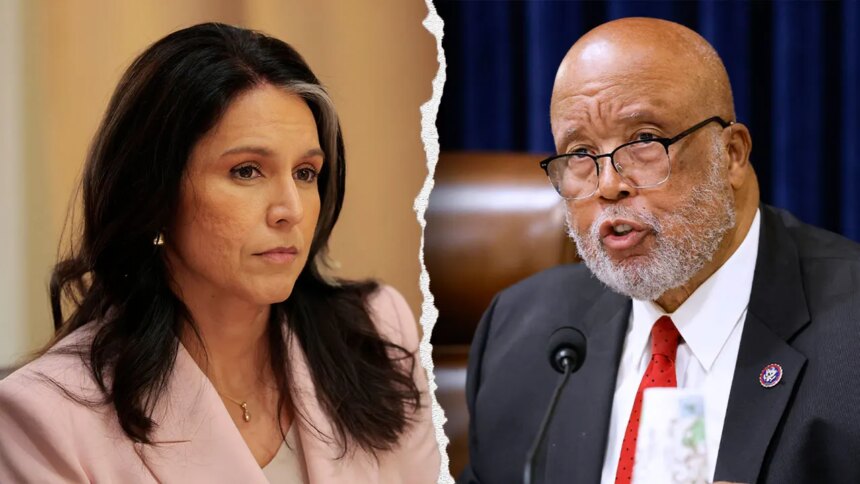
During a recent congressional hearing on “Worldwide Threats to the Homeland,” Director of National Intelligence Tulsi Gabbard expressed strong criticism toward Rep. Bennie Thompson, D-Miss., for his comments regarding the shooting of two West Virginia National Guard soldiers in Washington, D.C. Thompson described the tragic incident as an “unfortunate accident,” a characterization that Gabbard vehemently contested during an appearance on “Fox & Friends.”
In her remarks, Gabbard condemned Thompson’s phrasing, stating that it was “absolutely infuriating” that he did not classify the shooting as a terrorist attack on American soil. She emphasized the gravity of the situation, pointing out that the victims were National Guard members who risk their lives to protect the American public. The shooting occurred on Thanksgiving Eve when two guardsmen were targeted blocks away from the White House, allegedly by an Afghan refugee. Specialists Sarah Beckstrom was killed, and Staff Sergeant Andrew Wolfe sustained critical injuries in the assault.
During the hearing, Thompson addressed Secretary of Homeland Security Kristi Noem, saying, “Madam Secretary, you and the gentleman from NCTC (National Counterterrorism Center) referenced the unfortunate accident that occurred with the National Guardsman being killed.” In response, Noem firmly asserted that it was not simply an unfortunate incident but a terrorist attack.
Gabbard highlighted that the exchange between Thompson and Noem underscored a substantial issue, noting that politicians from both parties have consistently failed to identify Islamist terrorist threats accurately. This lack of clarity, she argued, contributes to ongoing vulnerabilities in national security.
After his initial statement drew criticism, Thompson later appeared on “CNN News Central,” where co-host Kate Bolduan pressed him for clarification on his earlier remarks. He denied maintaining that the shooting was merely an accident, stating, “Oh, absolutely not.” He explained that his comments were meant to guide the discussion toward the asylum application process related to the assailant rather than to downplay the severity of the attack. When asked if he had misspoken, he affirmed that he indeed had.
The heated exchange underscores the ongoing debate about how to appropriately label and respond to acts of violence deemed terrorist threats, particularly in the context of national security and political accountability.