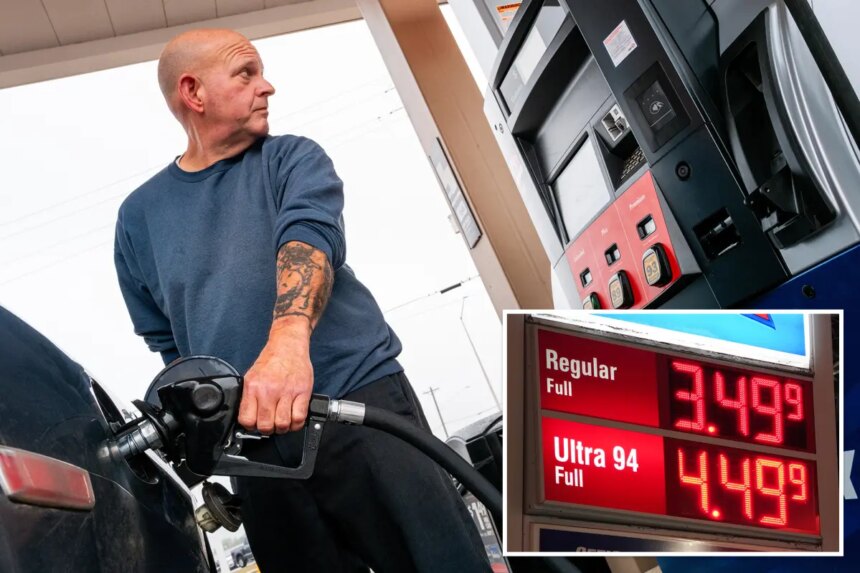
New Yorkers are facing a significant increase in gas prices, with regular unleaded gasoline averaging $3.58 per gallon as of Saturday. This marks a notable jump from the $2.86 seen just three weeks prior, as reported by GasBuddy. Some local stations are already nearing the $4 per gallon mark, further straining consumers’ wallets.
The upward trend in gas prices isn’t limited to New York; the average price across the United States has risen by 26 cents per gallon in just a week. According to the American Automobile Association (AAA), the average nationwide price reached $3.68 on Saturday, reflecting a staggering 70-cent increase since the onset of the conflict in the region.
This surge in prices stems from major global disruptions, notably the blockade of the Strait of Hormuz by Iran in retaliation for ongoing U.S. and Israeli military actions that commenced on February 28. Approximately one-fifth of the world’s oil supply has been affected due to this blockade, contributing to the price hike.
The last time Americans encountered gas prices of this magnitude was in May 2024. Prior to the initiation of strikes related to the conflict, the cost of a gallon of regular gas was a much more manageable $2.98. Current crude oil prices hover just above $100 per barrel, and with the U.S. transitioning to summer-blend gasoline—which is more environmentally friendly but more costly to produce—the likelihood of relief from soaring prices appears slim.
Since the beginning of the war, gas prices in the U.S. have risen nearly 25%. In a response to the situation, President Trump announced the release of 172 million barrels from the U.S. Strategic Petroleum Reserve, marking the largest release in American history. However, given that the U.S. consumes about 20 million barrels of petroleum each day, this emergency measure will only satisfy domestic demands for just over eight days.
Consumers are left grappling with a financial burden, hoping for stabilization in gas prices while the geopolitical landscape continues to evolve.