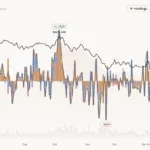
Geopolitical dynamics have transitioned from being a mere background risk to emerging as a primary influence on the U.S. stock market, reshaping its landscape. Heightened tensions across the Middle East, along with strategic competition between global powers, are increasingly dictating sector performance, capital flows, and overall investor sentiment. This shift indicates that the market is no longer solely influenced by earnings and interest rates but is also significantly affected by global power dynamics.
Currently, energy has taken center stage, reflecting the immediate impact of geopolitical tensions on oil and energy markets. Conflicts in key regions, particularly around vital shipping routes, have raised concerns over supply disruptions. As a result, major energy companies like Exxon Mobil and Chevron are well-positioned to benefit from this changing landscape. The market is experiencing higher baseline oil prices, increased volatility, and stronger cash flows for producers, thus establishing energy as more than just a cyclical sector.
In addition, increased geopolitical tensions are driving a worldwide surge in military spending, creating advantageous conditions for defense contractors such as Lockheed Martin and RTX Corporation. The trend appears to be structural, featuring long-term contracts and escalating global defense budgets, along with growing demands for advanced weapons systems.
The evolution of globalization into a more fragmented system is prompting companies to prioritize resilience over efficiency. Businesses are increasingly reshoring manufacturing and diversifying their supply chains, reducing reliance on single regions. This shift has significant implications for major corporations like Apple and Qualcomm, resulting in higher costs and increased capital investment, albeit adding layers of operational complexity.
Technology has also become a pivotal asset in this new geopolitical framework. Innovations in areas such as artificial intelligence, semiconductors, and cybersecurity are under close scrutiny as competition among global powers intensifies. Companies at the forefront of this race, including Nvidia and Microsoft, find themselves navigating an environment increasingly shaped by government regulations and investments.
Interestingly, beyond the conventional sectors, geopolitical tensions are fostering growth in less obvious areas such as cybersecurity, data infrastructure, and industrial firms. Companies like CrowdStrike and Caterpillar are reaping benefits from these long-term structural shifts rather than merely responding to short-term events.
Looking ahead, geopolitics is anticipated to remain a significant force in shaping market trajectories. Several scenarios may unfold in the near term:
- Controlled Tensions could lead to stable markets, with energy prices remaining elevated but manageable and selective sector outperformance continuing.
- Escalation might trigger sharp oil price spikes and increased market volatility, prompting a rotation into defensive assets.
- Conversely, De-escalation could revive risk-on sentiment, reigniting growth stocks and improving broader market participation.
Investors would do well to remain vigilant regarding oil price movements, defense spending trends, trade policy developments, supply chain dynamics, and key geopolitical flashpoints. These elements are increasingly critical in determining the direction of market performance.
The U.S. stock market is thus entering a new phase where geopolitical considerations intertwine with economic fundamentals, with energy, defense, and strategic technology sectors playing increasingly pivotal roles. Understanding how these geopolitical forces shape market dynamics has become essential for investors. In today’s environment, the next significant market movement may hinge not on earnings or interest rates but on events unfolding far beyond the confines of Wall Street.