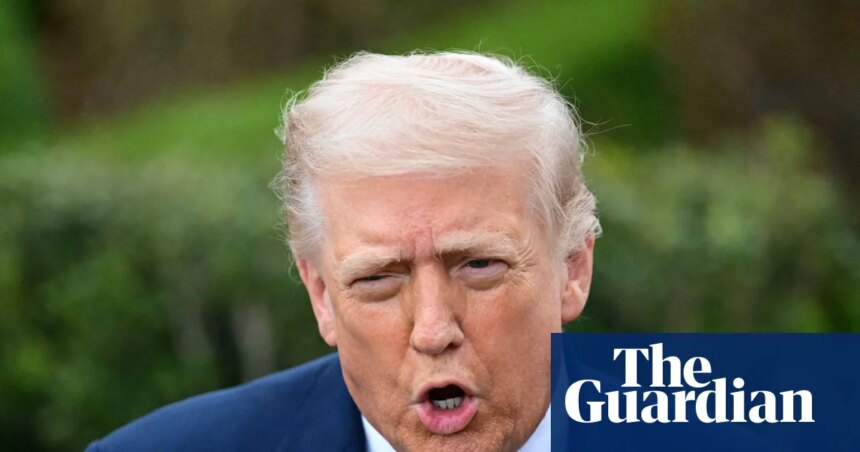
Global stock markets experienced a significant downturn on Monday following a dramatic escalation in tensions between the United States and Iran. President Donald Trump issued a stern warning, stating that he would “obliterate” Iran’s electrical power plants unless the critical Strait of Hormuz is reopened. This strategic waterway is crucial for global shipping, carrying roughly one-fifth of the world’s oil and liquefied natural gas supplies.
As a result of the escalating conflict, Asian and European stock indexes plummeted. Japan’s Nikkei share index recorded a sharp decline of 3.4%, while China’s CSI 300 fell by 2.8%. In South Korea, the Kospi dropped an alarming 6.5%. European markets mirrored this negative sentiment, with Spain’s Ibex down 1.9%, France’s CAC 40 declining 1.5%, Germany’s DAX falling by 1.9%, and the FTSE 100 losing nearly 1.5%.
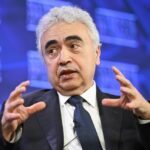
In a flash of urgency, Trump mandated Iran to take action by midnight GMT on Monday. Tehran’s response was equally aggressive, threatening to “irreversibly destroy” essential infrastructure across the Middle East if the U.S. followed through on its threats. The Iranian military has already undertaken actions that have effectively closed the Strait of Hormuz, setting off alarms for a potential global energy crisis. Fatih Birol, head of the International Energy Agency, has compared the situation to the combined impact of the oil shocks of the 1970s and the ramifications of Russia’s invasion of Ukraine.
Amid spiraling tensions, financial analysts are bracing for significantly higher oil prices. Goldman Sachs has revised its forecast for Brent crude, the international oil benchmark, estimating it will average $85 per barrel this year, a rise from earlier predictions of $77. On Monday, oil prices increased by 1.2%, reaching $113.34 per barrel, although this is still below the record highs of $199 a barrel seen earlier this month.
Additionally, UK month-ahead gas prices surged by 3.1% to 155 pence per therm, nearly doubling compared to levels before the onset of the Iran conflict. The spike in energy prices has unsettled investors, and gold prices reflected a strong market reaction. The spot price of gold plummeted 5.8% to $4,226.16 an ounce amidst expectations of rising inflation and subsequent interest rate hikes.
In response to the crisis, UK opposition leader Keir Starmer convened an emergency Cobra meeting with top ministers and Bank of England governor Andrew Bailey. Main agenda items included the economic ramifications of the escalating situation in Iran, discussions around energy security, supply chain resilience, and potential international responses to the conflict.
The fallout from the Iranian crisis is intensifying pressure on Starmer to propose a support package aimed at helping citizens cope with surging energy bills, which are anticipated to rise by 20% when the current price cap on gas and electricity expires at the end of June.
Investor focus has also shifted to the bond markets, particularly after the 10-year yield, a benchmark for Britain’s borrowing costs, reached 5% for the first time since the 2008 financial crisis. This rise occurred after the Bank of England’s rate-setting committee voted to maintain interest rates at 3.75% last Thursday.
In this volatile climate, the U.S. dollar, often viewed as a safe-haven asset during turbulent times, experienced a modest uptick, with the dollar index—measuring the currency against a basket of others—increasing by 0.2%.