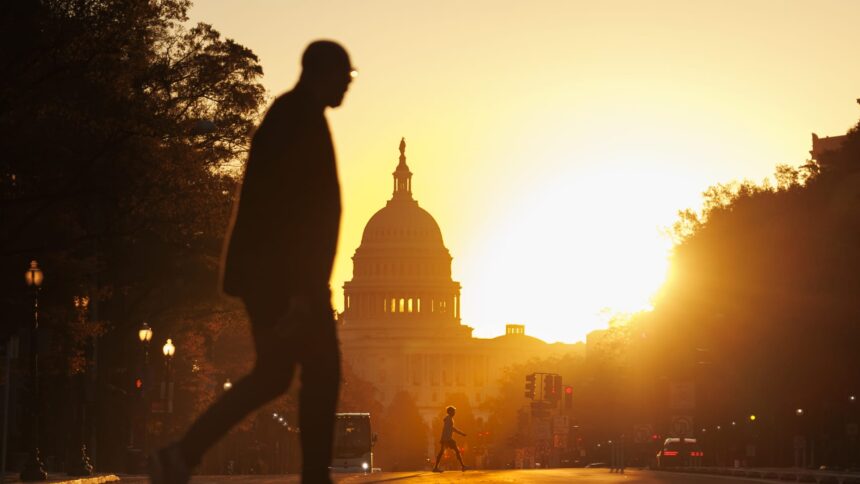
Global stock markets experienced a significant rally on Monday, reflecting growing optimism that the longest-ever U.S. government shutdown may soon come to an end. The U.S. Senate has successfully passed the initial phase of a bipartisan agreement aimed at funding the government through January 30 of next year. This deal not only seeks to maintain government operations but could also lead to the reinstatement of some permanent layoffs of government employees that occurred during the 35-day shutdown.
Strategists believe that the resolution of the shutdown would bolster investor confidence, particularly following a week marked by volatility in AI and technology stocks, which had pushed global equities lower. Speaking on CNBC’s “Europe Early Edition,” Jason Paltrowitz, an executive vice president at OTC Markets, emphasized the importance of moving beyond the shutdown. “I think all news is good news,” he stated, underscoring that both the economy and investor sentiments need reassurances in light of ongoing uncertainties.
Ahead of Monday’s market opening, U.S. stock futures reflected positive sentiment, while European markets also rose, with the Stoxx 600 index gaining 1.4%. Key indices in the U.K., Germany, and France showed similar upward trends. Analysts from Edmond de Rothschild Asset Management remarked that the threat of negative economic fallout had catalyzed bipartisan negotiations in Congress, pushing both parties toward compromise.
One sector that has faced challenges throughout the impasse is the airline industry, which has suffered from a dwindling number of air traffic controllers due to missed paychecks. This shortage has led to a reduction in available flights, raising concerns about the impact on holiday travel, particularly during Thanksgiving. However, shares of U.S. airlines surged in pre-market trading as fears surrounding potential flight cancellations began to dissipate.
Consumer sentiment has also been a focal point during the shutdown, as investors grappled with a lack of data amid growing uncertainty regarding the U.S. economy. Investment strategists have indicated that the resumption of data reports would provide much-needed clarity to the markets. Jonathan Pingle, the chief U.S. economist at UBS Investment Bank, pointed out that the release of data from August is anticipated to be encouraging, although subsequent data may present a stark contrast.
Pingle described the shutdown as a “huge inconvenience” and a “drag on growth,” noting the increasing optimism surrounding the news from Capitol Hill. “Businesses are going to be happy having a functioning government and getting past reports,” he commented.
Nick Nelson, a global equity strategist at Absolute Strategy Research, echoed these sentiments, labeling the bipartisan deal as “good news” for market stability. He referenced last week’s weaker consumer confidence data, warning that a prolonged shutdown could adversely affect consumer spending as payments continue to be delayed.
Overall, the developments surrounding the potential resolution of the government shutdown have injected a renewed sense of confidence among investors and analysts alike, with hopes for a more stable economic environment in the near future.