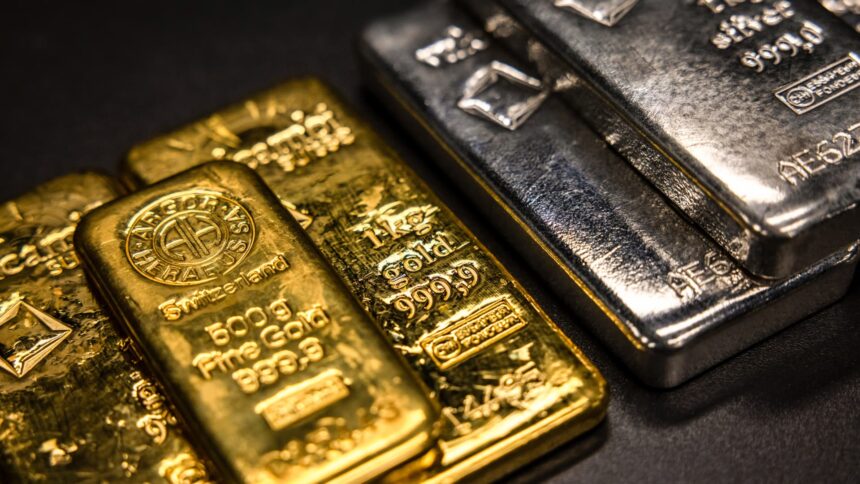
Gold and silver prices surged to unprecedented levels on Monday, reflecting a significant shift in market dynamics. Gold reached an astonishing record of $4,445.8 per ounce, with spot gold trading at $4,414.99. This marks a remarkable increase of nearly 70% since the beginning of the year. The surge in gold prices is attributed to rising uncertainty in risk assets, as investors seek refuge in what is traditionally considered a safe haven during economic or geopolitical instability.
Silver prices mirrored this upward trend, hitting a peak of $68.96 per ounce, with spot silver trading at $68.98. Silver’s price has skyrocketed by 128% since the start of the year, further illustrating the strong demand for precious metals.
In U.S. markets, shares of gold and silver mining companies saw an uptick in premarket trading, with the iShares MSCI Global Gold Miners ETF rising nearly 2.7%. This uptick is indicative of investor optimism in the mining sector as gold and silver maintain their allure.
The backdrop for this surge includes the much-anticipated interest rate cut from the Federal Reserve, which took place on December 10. While this cut initially spurred optimism in AI stocks, global investors soon returned to a defensive posture, driven by concerns surrounding fiscal deficits in major economies such as the U.S., U.K., Europe, Japan, and China. According to Matthew McLennan, head of the global value team at First Eagle Investments, the potential monetary value of gold has once again come to the forefront.
McLennan elaborated that the value of gold—previously viewed as undervalued relative to nominal assets—is now seen as more rationally priced, which has had a cascading effect on other precious metals. He indicated that the gold market has transitioned from a state of depression to one where its value as a hedge against economic instability is more recognized and accepted.
Market participants are now closely monitoring developments regarding the nomination of the next chair of the Federal Reserve. The central bank’s independence and credibility have come under scrutiny, particularly following persistent pressure from U.S. President Trump on current chair Jerome Powell. McLennan emphasized the importance of the long-term fiscal credibility of the United States, stating it is crucial for maintaining an independent Federal Reserve and ensuring rational governance.
Additionally, McLennan expressed interest in wage inflation and its implications. He pointed out that the trajectory of job openings, which have shown a recent uptick, will be critical in determining whether they will align with corporate earnings, thereby impacting future economic stability.
Overall, investor sentiment regarding precious metals remains robust, driven by concerns over economic uncertainty and fiscal challenges, as well as the evolving landscape of monetary policy.