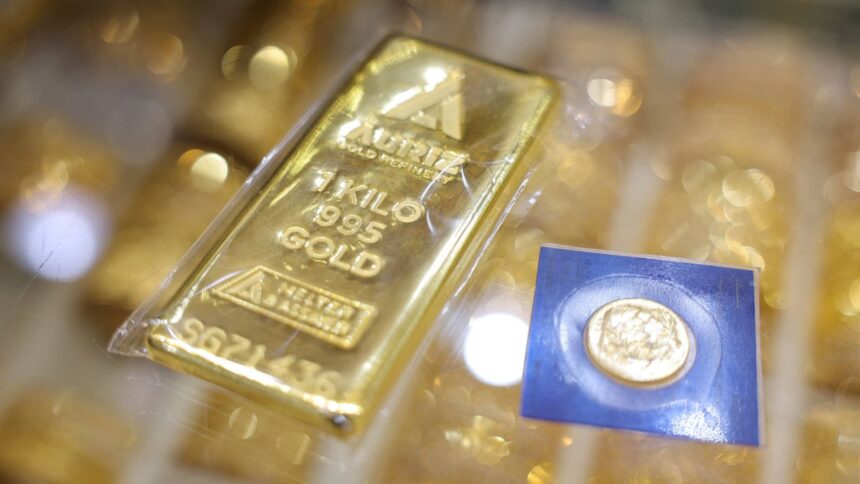
Gold and silver prices surged significantly on Wednesday, with analysts anticipating that further price movements will largely hinge on foreign exchange trends and interest rate expectations. As of 5:37 a.m. ET, spot gold rose by 2.4% to $5,054.6 per ounce, while gold futures experienced a larger gain of approximately 3.4%, reaching $5,100. In the silver market, spot prices surged by 5.8% to $90 per ounce, with silver futures climbing 8% to $90.16.
This price rebound comes on the heels of a dramatic selloff in precious metals, with gold plummeting nearly 10% and silver suffering a staggering 30% drop—the most significant one-day decline for the metal since 1980. Ewa Manthey, a commodities strategist at ING, noted that gold’s recovery reflects renewed buying interest following one of the sharpest corrections in recent history, driven by broader market stabilization and a softened U.S. dollar.
Despite the ICE U.S. Dollar Index remaining relatively stable at 97.382, it has dropped significantly from a recent high of 99.39 recorded on January 19, setting the stage for the recent rebound in gold and silver prices. Additionally, mining stocks in London showed positive performance, with Rio Tinto up by 1% and Anglo American increasing by 0.7%, while Antofagasta saw a slight decline of about 0.2%. The FTSE 350 Precious Metals and Mining Total Return Index rose by 2%, positioning itself at around 34,963.
Concerns surrounding market volatility were echoed by UBS CEO Sergio Ermotti, who observed that clients have become more cautious, particularly moving away from tech investments. “They are looking for protection,” Ermotti said, suggesting that excess capital is being redirected into more stable markets, including precious metals.
Looking ahead, analysts remain skeptical about whether the current gains in precious metals will be sustainable. According to Manthey, although short-term volatility may persist, the movement may be more of a tactical reset rather than a robust structural change. Future price increases are likely to be influenced by fluctuations in the U.S. dollar, interest rate expectations, and overall market sentiment, with a steadier climb anticipated rather than the explosive rallies seen in recent months.
Goldman Sachs has set a target price of $5,400 for gold by the end of 2026, driven by expectations that central banks will continue their accumulation at the same pace and that private investors will increase their purchases of gold ETFs as the Federal Reserve cuts rates. In a more optimistic outlook, BofA Securities projects a $6,000 target for gold in upcoming months, though they caution that the rapid pace of recent price gains and accompanying volatility present potential risks.
Forecasts are further complicated by political uncertainties as the nation approaches mid-term elections in November, along with questions surrounding the direction of U.S. interest rates and the anticipated actions from President Donald Trump’s nominee for the Federal Reserve chair, Kevin Warsh. BofA notes that while the ultimate effects of a Warsh-led Fed on precious metals remain unclear, the underlying motivation for recent market corrections may not be strictly tied to anticipated interest rate movements but rather a more optimistic outlook on the Fed’s approach to monetary policy.