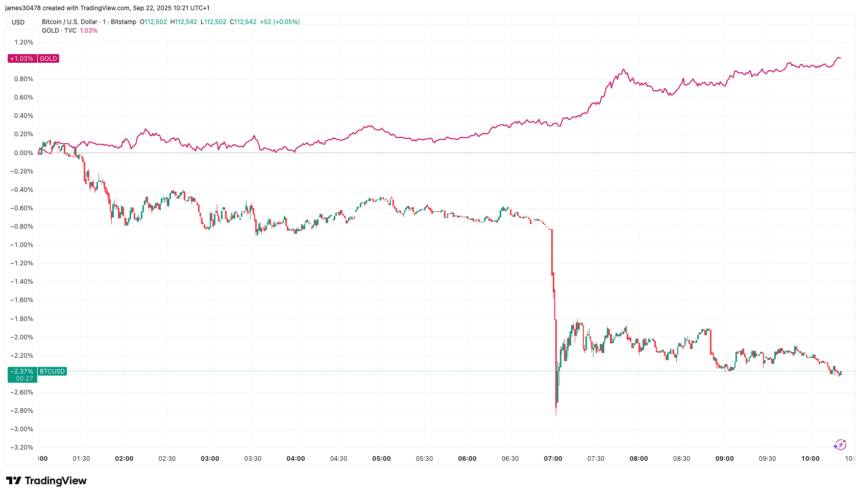
Gold prices surged by 1% on Monday, reaching a record high of $3,721, marking a remarkable 43% gain for the year 2025. This increase in gold’s value followed a notable decline in Bitcoin, which saw a 3% drop over 24 hours, reducing its price to $112,000 and its year-to-date gain to 17%. Analysts suggest that the timing of these movements indicates that profits from Bitcoin liquidations may have been redirected into gold.
Historically, gold and Bitcoin have shown distinct movement patterns, rarely aligning in price fluctuations. However, recent trends depict a more pronounced divergence between the two assets. While gold continues to attract significant investment, silver has also seen a substantial increase, rising by 1.5% on the same day to approach $44. This marks silver’s third-highest level since 1975 and a remarkable gain of over 50% year to date.
The recent performance of both gold and the S&P 500 can be partly attributed to the Federal Reserve’s decision to cut interest rates by 25 basis points on September 17. Following this announcement, both gold and the S&P 500 each appreciated approximately 1%. During this period, U.S. Treasury yields have also increased, with the 10-year yield rising to 4.125% and the 30-year yield reaching 4.7%, marking increases of 2.5% and 2%, respectively.
In contrast, the U.S. dollar experienced strengthening, with the DXY index climbing by 1% to 97.5. A stronger dollar typically exerts downward pressure on risk assets, which might explain Bitcoin’s over 3.5% decline since the Fed’s announcement. These developments in the financial markets highlight the complex interplay between gold, Bitcoin, and macroeconomic factors influencing investment behavior.