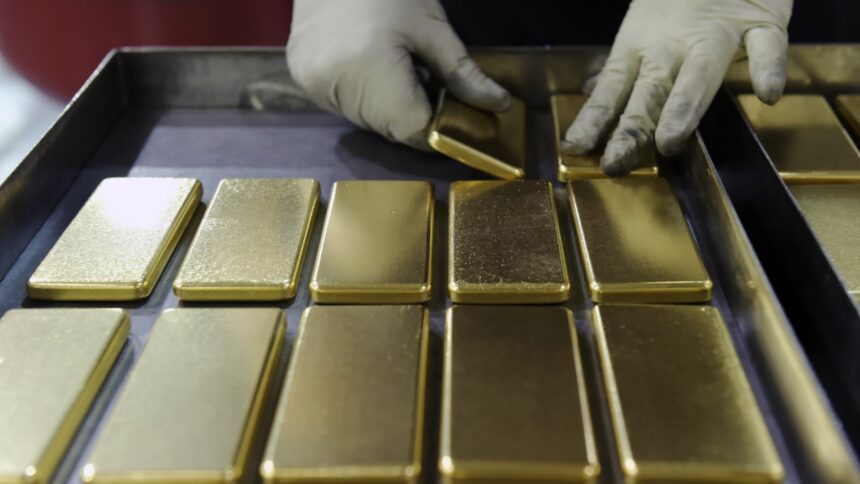
Gold prices experienced a significant decline on Monday, falling approximately 2%, primarily due to a stronger U.S. dollar and rising oil prices that intensified inflation concerns. These developments have dampened the likelihood of imminent interest rate cuts.
Spot gold, which is priced in U.S. dollars, dropped by 1.2% to $5,104.99 per ounce, having earlier seen a reduction exceeding 2% during the session. Meanwhile, U.S. gold futures for April delivery decreased by 0.9%, settling at $5,112.20. The dollar reached a peak not seen in over three months, making gold more expensive for investors holding other currencies.
Additionally, the yield on the U.S. 10-year Treasury bond rose to a one-month high. This increase in yields adds to the cost of holding non-yielding gold, making it less attractive to investors. Tim Waterer, chief market analyst at KCM Trade, highlighted that the combination of surging oil prices and the dollar’s strength is negatively impacting gold’s performance, despite ongoing market volatility.
Oil prices witnessed a dramatic increase of over 15%, surpassing $110 per barrel. This spike was fueled by escalating tensions in the U.S.-Israeli conflict with Iran, leading several major Middle Eastern oil producers to cut supplies amid fears of potential disruptions in shipments through the crucial Strait of Hormuz.
Waterer noted that much of gold’s price appreciation over the past year was predicated on expectations of a dovish stance from the U.S. Federal Reserve regarding interest rates. However, the current inflation risks due to elevated oil prices have led to a reevaluation of those expectations, with rate cuts now appearing less likely.
Market participants are anticipating that the U.S. Federal Reserve will maintain interest rates during its upcoming two-day meeting on March 18, according to insights from CME Group’s FedWatch tool. The likelihood of the Fed holding rates steady in June has risen to over 51%, up from below 43% when the conflict began.
In a related development, Iran announced the appointment of Mojtaba Khamenei as the successor to his father, Ali Khamenei, as supreme leader. This announcement indicates that hardline elements continue to hold sway in the Iranian political landscape, potentially escalating regional tensions further.
The intertwining effects of geopolitical uncertainty and economic indicators are creating a complex landscape for investors, particularly in the gold market, as they navigate inflation threats and interest rate trajectories.