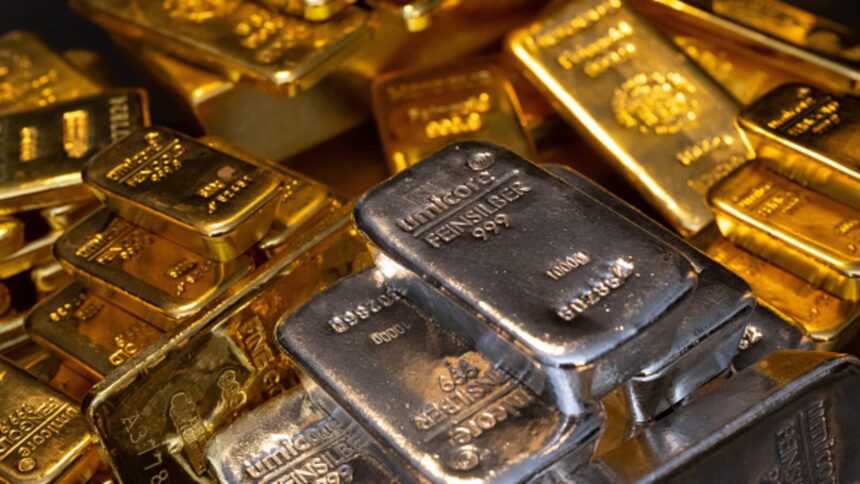
Gold and silver markets experienced contrasting movements on Friday following a steep decline the previous day. In the early hours, spot gold prices managed a slight recovery, climbing 0.3% to reach $4,662.51 per ounce. Meanwhile, gold futures saw a more notable gain of 1.2%, settling at $4,662.10. In contrast, silver faced continued pressure, plummeting approximately 1.7% to hover around $71.62 per ounce, with brief fluctuations observed throughout the morning session. Silver futures did show moderate signs of recovery, increasing around 0.8%.
Both precious metals are heading towards a disappointing week, with gold poised to lose nearly 9% and silver on track for a decline exceeding 10%. The downturn in these markets was triggered by a broader sell-off, which took place after concerns about the economic repercussions of the ongoing war between the U.S. and Israel against Iran escalated. On Thursday, prices for these metals fell about 3%, fueled by heightened anxieties over the geopolitical situation and its impact on global markets.
The oil market has been particularly turbulent, influencing investor sentiment significantly since the conflict erupted. On Friday, oil prices showed slight improvement after earlier declines. Global equity markets presented mixed results, with European stocks facing challenges in establishing a clear direction, while Asian shares predominantly trended downwards. Data from U.S. futures indicated a likely negative opening for Wall Street, following a signal of a potential rebound from the previous day’s losses.
Arthur Parish, a metals and mining equity analyst at SP Angel, commented on the recent volatility in gold prices, suggesting that the erratic trading patterns can be attributed to momentum trades unwinding following a substantial rally when tensions escalated in the region. He noted that gold and silver had both experienced exceptional rallies in 2025, with increases of 66% and 135%, respectively, but have faced a much more turbulent trading environment in 2026. Silver futures, in particular, endured their largest single-day decline since the 1980s at the close of January.
During the 2025 bull run, there was significant interest from a wide range of investors, including retail and systematic hedge funds. However, as these investors are less committed to long-term gold positions, their exit from the market could pave the way for a more sustainable upward trajectory for gold prices in the future.
Toni Meadows, head of investment at BRI Wealth Management, offered insights into the factors influencing gold and silver prices, emphasizing their reliance on daily demand and broader market fears rather than just short-term fluctuations. He cautioned against using these metals solely as a hedge against daily risk asset movements, framing them instead as products driven by longer-term trends.