In a shifting financial landscape, the US dollar remains the preferred global reserve currency, but recent trends suggest that gold is becoming an increasingly attractive alternative for investors. As political instability, surging government debt, and erratic central bank policies cast doubt on the reliability of fiat currencies, gold has emerged as a favored safe-haven asset.
The influx of capital into gold reflects a growing disenchantment with traditional financial instruments. This shift, often referred to as the “debasement trade,” highlights not just a declining faith in fiat currencies, but a strategic rebalancing of risks in response to escalating government debts. As the US dollar index experienced a nearly 9% drop this year, these trust issues have compelled investors to consider gold more seriously as a refuge for their assets.
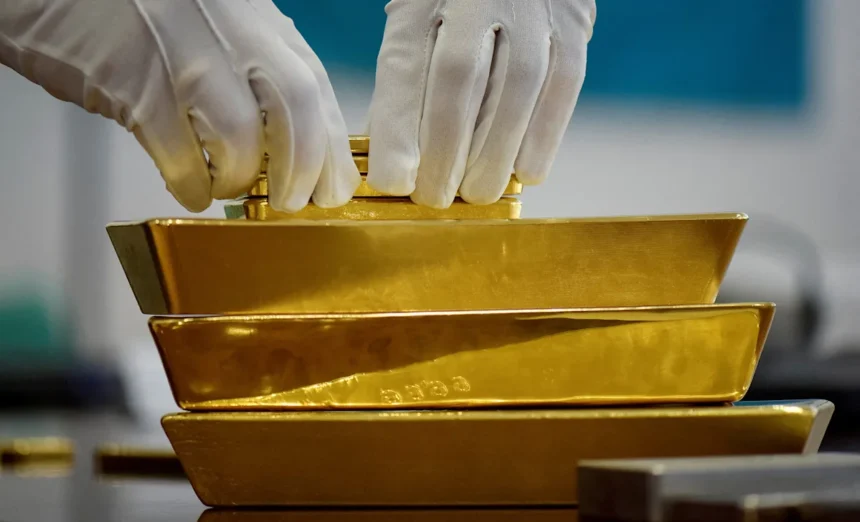
Gold has recently hit unprecedented levels, surpassing the $4,000-per-ounce mark for the first time, which many analysts view as indicative of a significant flight from less stable investments. This surge in gold prices echoes past periods characterized by high inflation and economic uncertainty. However, the current market environment presents a unique juxtaposition: while stocks are reaching all-time highs and corporate profits appear robust, there is also a notable retreat toward tangible assets.
Simultaneously, cryptocurrencies are also gaining traction. Bitcoin has reached new heights, bolstering the argument of its proponents who see it as a hedge against inflation and a store of value akin to gold. Interestingly, at this juncture, gold appears to be reclaiming its status as the quintessential safe haven, with its stability and historical reputation allowing it to eclipse some of the appeal of cryptocurrencies.
The collective movement toward hard assets and cryptocurrencies signals a broader concern regarding unsustainable government spending and the subsequent debt accumulation. With economic growth seen as a potential remedy to this financial quagmire, many investors are betting that anticipated lower interest rates could further buoy gold prices.
While market diversions among competing asset classes may seem relevant, the more pressing takeaway is the overarching preference for stable reserves in an environment fraught with uncertainty. Investors are increasingly seeking refuge in assets that can withstand the pressures of a changing economic paradigm.